Can I Buy Ethereum If I'm Under 18? Age Rules Explained
On this page
Hi, I really want to start investing in crypto and buy Ethereum, but I'm only 16-years-old. Can I still do it, or would I need to sign up under my dad?
The short answer
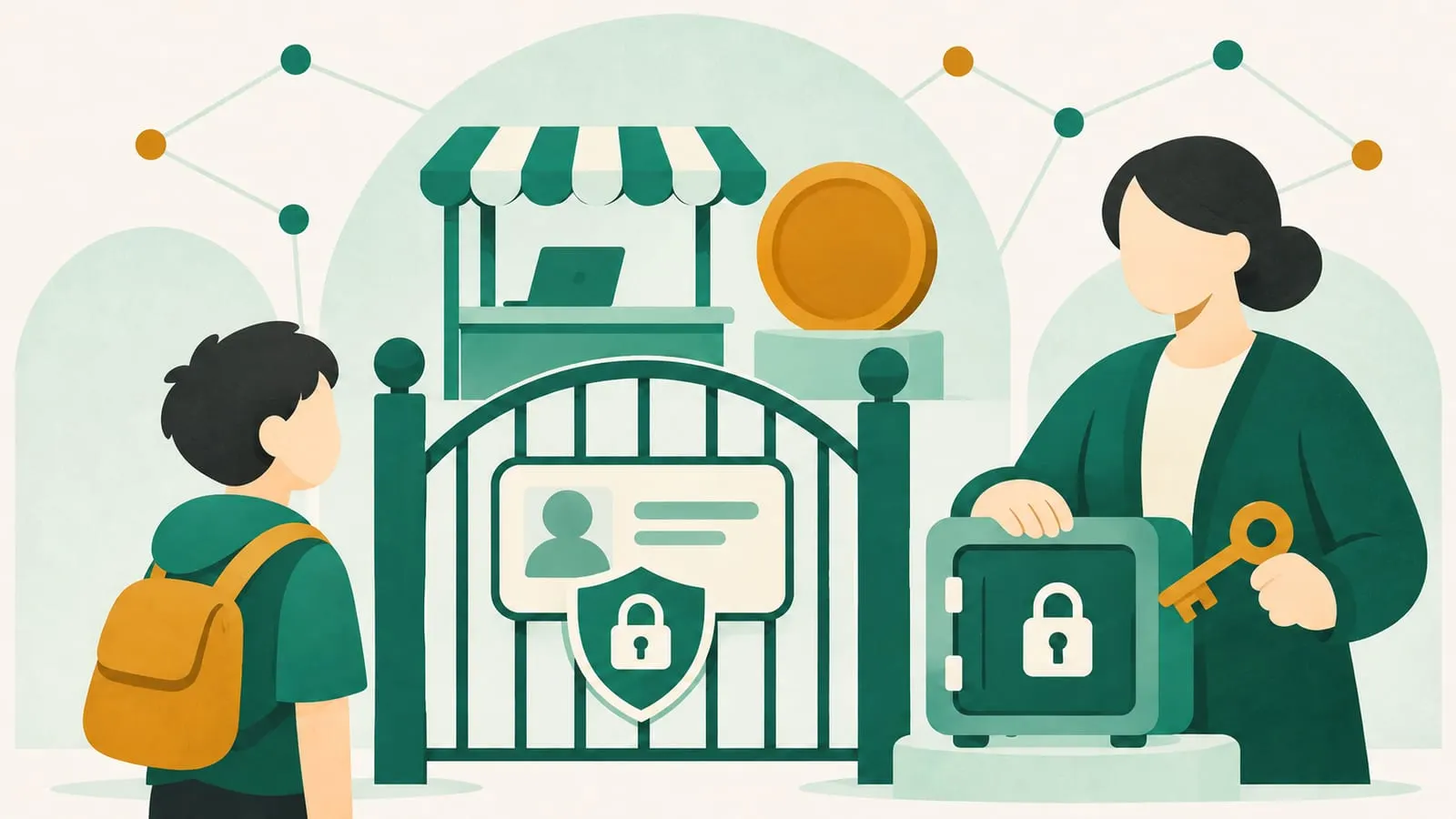
No. If you’re under 18, you can’t open your own account on a regulated exchange or app to buy Ethereum. Platforms such as Coinbase and Kraken require users to be at least 18, and they check your date of birth against a government ID during sign-up. Coinbase’s terms add that you must also have reached the local age of majority where it is higher than 18; in Canada, that means 19 in several provinces and territories, such as British Columbia and Nova Scotia.
That isn’t just company policy. It reflects legal rules about identity verification and about who can sign a binding financial contract. If you’re interested in crypto, the honest options are to learn now and wait, or to talk to a parent or guardian about whether they want to invest in their own name.
Why exchanges require you to be 18
Identity checks (KYC) are a legal requirement
Regulated exchanges must follow anti-money-laundering laws that require them to verify each customer’s identity, a process called KYC verification. That usually means your full name, date of birth, address and a valid photo ID. Kraken’s support pages, for example, list being “18 years of age or older” as a basic requirement, alongside full name, date of birth and valid ID. Platforms reserve the right to restrict or close accounts that don’t meet their eligibility rules.
Minors generally can’t be held to financial contracts
Opening an exchange account means agreeing to a legal contract covering fees, losses, tax reporting and disputes. In many countries, including the US and UK, contracts signed by minors can often be cancelled by the minor later. Platforms avoid that uncertainty by only contracting with adults.
Consumer protection
Crypto prices can drop sharply, and trading is fast and irreversible. Regulators and platforms treat these as products for adults who can legally take responsibility for losses.
Can I sign up using my parent’s account?
This is what the original question asked, and the answer is no, you shouldn’t. Using a parent’s identity, or letting a minor trade on an adult’s account, breaks the platform’s terms of service. The consequences can include:
- The account being frozen or closed, sometimes with funds held during a review.
- Your parent being legally and tax responsible for every transaction, because the account is in their name.
- Problems later: an account flagged for misuse can make it harder for your parent, or you as an adult, to use that platform.
Lying about your age when signing up has the same problems, and it won’t get past ID verification on regulated platforms anyway.
What are the legitimate options?
These options are decisions for a parent or guardian, not workarounds for a minor.
| Option | Whose asset it is | Who makes decisions |
|---|---|---|
| A parent buys ETH in their own account | The parent’s | The parent |
| A custodial investment account for a child (where available) | Legally the child’s, managed by a custodian | The adult custodian until the child reaches the age set by state law |
| Wait until you’re 18 | Yours | You |
- A parent investing in their own name. A parent can choose to buy Ethereum with their own verified account. It is their money and their decision, and they carry the risk and tax obligations.
- Custodial accounts. In the US, parents can open custodial brokerage accounts (UGMA/UTMA) for a child. FINRA notes that money placed in these accounts is an irrevocable gift to the child, and the adult custodian manages it until the child reaches the age set by state law (often 18 or 21), when control must pass to the child. Brokers decide which investments they allow in these accounts, and many don’t offer crypto or crypto-linked funds in them at all. A parent should check with the broker and understand the tax treatment first.
Why “no-ID” methods are a bad idea
You may see suggestions online, including in older answers on this page, to buy crypto with gift cards, from no-ID sellers or through peer-to-peer trades to avoid age checks. We don’t recommend or explain these. They are where young people most often get scammed: fake sellers, payment fraud, fake “investment” groups and phishing links that empty wallets. Any money lost this way is usually gone for good, because blockchain transactions can’t be reversed. Learn the common crypto scams and red flags before you ever hold crypto.
What you can do now
Being under 18 is a good time to learn how crypto works without risking money:
- Learn the basics. Start with what a blockchain is, how crypto wallets and private keys work, and what DeFi means.
- Use test networks. Ethereum has test networks that use free tokens with no real value. You can practice sending transactions and exploring smart contracts there; check each tool’s terms for age requirements and involve a parent.
- Learn to build. If you’re interested in development, learning to write smart contracts involves no purchase at all.
- Save in a regular account. If you want to invest later, saving now in a bank account keeps your options open.
Risks to understand before anyone buys Ethereum
- Volatility. ETH’s price has fallen by more than half several times in its history. Only money you can afford to lose should be involved.
- Irreversible mistakes. Sending to the wrong address or approving a malicious contract can’t be undone.
- Self-custody responsibility. If you hold ETH in your own wallet and lose the seed phrase, nobody can recover it.
- Taxes. In many countries, selling or swapping crypto is a taxable event; see our crypto tax overview.
About the original community answers
The older answers on this page suggested ways for minors to buy crypto without ID and highlighted “teen crypto millionaires”. Those suggestions conflict with platform rules and expose young people to scams, so they’ve been replaced with this guide. For more on regulation, see the Regulation & Tax hub.
Frequently asked questions
What age do you have to be to buy Ethereum?
On regulated platforms such as Coinbase and Kraken, at least 18. Coinbase's terms also require you to have reached the local age of majority if it is higher, such as 19 in some Canadian provinces including British Columbia and Nova Scotia.
Can my parents buy Ethereum for me?
A parent can buy Ethereum in their own name with their own account. It's then legally their asset, and the decisions are theirs. They shouldn't let you use their account, because that breaks most platforms' terms.
Is it illegal for a minor to own crypto?
Owning crypto generally isn't illegal in itself, but regulated platforms aren't allowed to, or won't, open accounts for minors, and rules vary by country. That's why minors can't buy through normal channels.
Can I use a crypto wallet app under 18?
A wallet stores crypto rather than selling it, and in-app purchases go through third-party payment providers that run their own ID and age checks. MetaMask's terms, for example, say people under the age of majority may use it only with the consent of, or under the supervision of, a parent or legal guardian.
What can I do now if I'm interested in crypto?
Learn how blockchains, wallets and DeFi work, explore test networks that use free test tokens, and save money in a normal bank account until you're old enough to decide for yourself.
Sources
- Kraken Support: Verification level requirements
- Coinbase User Agreement (United States): Eligibility
- Coinbase User Agreement (Canada): Eligibility
- FINRA: Saving for college with UGMA and UTMA custodial accounts
- MetaMask Terms of Use: Eligibility
- FINRA: Ways to invest for children
- ethereum.org: What is Ethereum?
Educational content, not financial advice. DeFi carries risk, including total loss of funds.