How to Convert Bitcoin to Ethereum on a DEX (Native BTC and Wrapped BTC)
On this page
I want to exchange money (and crypto) without a 3rd party. So far, I have Bitcoin. How do I exchange this for Ethereum on a decentralized platform?
The short answer
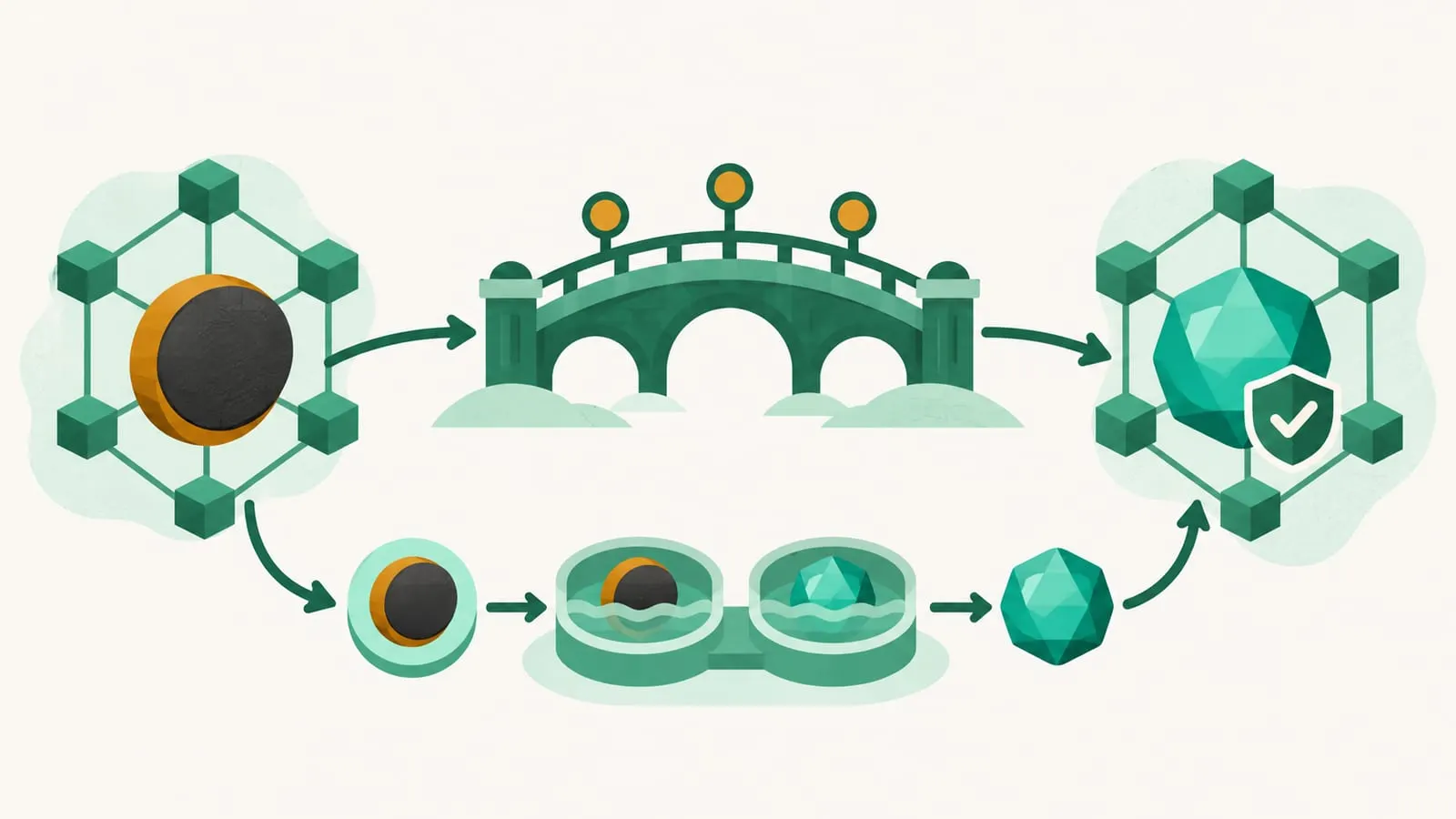
You can convert bitcoin to Ethereum on a decentralized platform, but not on an ordinary Ethereum DEX like Uniswap, because native BTC lives on a different blockchain. You have two practical routes:
- Cross-chain swap (native BTC to native ETH). A protocol such as THORChain or Chainflip takes BTC from your Bitcoin wallet and sends ETH to your Ethereum address.
- Wrapped BTC swap. If your bitcoin is already in token form on Ethereum (WBTC, cbBTC or tBTC), you swap it for ETH on any Ethereum decentralized exchange.
The older answers on this page told readers to connect a “Bitcoin wallet” to Uniswap. That doesn’t work: Uniswap can’t see or move coins on the Bitcoin network.
Why you can’t just use Uniswap
Bitcoin and Ethereum are separate ledgers with no built-in connection. Ethereum DEXs run as smart contracts on Ethereum (or networks compatible with it), so they can only trade tokens that exist there. The Bitcoin network doesn’t support the kind of smart contracts that automated market makers need. To bridge that gap you need either a protocol that holds liquidity on both chains, or a token that represents bitcoin on Ethereum. Our page on buying bitcoin on a DEX explains the same issue in the other direction.
Compare the routes
| Route | You send | You receive | Typical speed | Main risk |
|---|---|---|---|---|
| Cross-chain swap (THORChain, Chainflip) | Native BTC from a Bitcoin wallet | Native ETH at an Ethereum address | ~10–60+ minutes | Protocol risk, thinner liquidity |
| Wrapped BTC on an Ethereum DEX | WBTC, cbBTC or tBTC | ETH | Seconds to minutes | Custodian or bridge behind the token |
| Centralized exchange (for comparison) | BTC deposited to the exchange | ETH, withdrawable to your wallet | Minutes to hours | Exchange custody, KYC |
Route 1: Swap native BTC to ETH with a cross-chain protocol
Cross-chain swap protocols keep pools of real assets on several blockchains. THORChain uses its own validator network to watch deposits and pay out on the destination chain; Chainflip runs a cross-chain AMM with a similar goal. Many multi-chain wallets and swap front ends route orders through these protocols, so you may use them without visiting their own sites.
Step by step
- Get an Ethereum address. Set up an Ethereum-compatible wallet and copy your receiving address. Keep its seed phrase offline.
- Choose an interface. Use a reputable wallet or front end that supports native BTC swaps. Open it from a bookmarked URL, not from an ad or a direct message.
- Enter the swap. Select BTC (on the Bitcoin network) as the input and ETH (on Ethereum) as the output, enter the amount and paste your Ethereum address as the destination.
- Review the quote. Check the expected ETH output, total fees, price impact and slippage tolerance. For larger amounts, some interfaces offer “streaming” swaps that split the trade over time to reduce price impact.
- Send the BTC. The interface gives you a deposit address. On THORChain the transaction also carries a memo that tells the protocol where to send your ETH; Chainflip instead opens a dedicated deposit address (a “deposit channel”) for your swap. Send exactly as instructed from your Bitcoin wallet. If the instructions are wrong or incomplete, the swap can fail or funds can be lost, so use an interface that builds the transaction for you rather than copying memos by hand.
- Wait for confirmations. The protocol waits for your BTC deposit to confirm, then sends ETH. Track progress with the transaction ID.
Expect fees from three places: the Bitcoin network fee to send your deposit, the protocol’s liquidity and swap fees, and the Ethereum fee for the outbound payment. Liquidity on these protocols is in the tens of millions of dollars rather than billions: in mid-November 2026, DefiLlama showed roughly $53 million in THORChain’s DEX TVL and about $10 million in Chainflip’s AMM TVL, so large trades can move the price noticeably. Our THORSwap and cross-chain DEX page covers the model in more depth.
Route 2: Swap wrapped bitcoin for ETH
If your bitcoin is already a token on Ethereum, the conversion is an ordinary DEX trade:
- Connect your wallet to an Ethereum DEX or DEX aggregator.
- Select your bitcoin token (WBTC, cbBTC or tBTC) as input and ETH as output. Verify the token’s contract address from the issuer’s official site.
- Approve the token, review the rate, gas fees and price impact, then confirm.
Turning native BTC into a wrapped token first usually involves a custodian, a merchant or a bridge, so for most people starting with native BTC, Route 1 or an exchange is simpler. Wrapped bitcoin depends on whoever holds the backing BTC; read whether you can trust wrapped bitcoin before relying on it.
What about instant-swap websites?
Some sites let you send BTC and receive ETH without an account. Many are centralized services that take custody of your coins during the swap, even if they call themselves decentralized. The service named in an older answer on this page uses this deposit-and-receive model. They may be convenient, but you are trusting the operator, and some may freeze swaps for compliance checks. Know which kind of service you’re using.
Risks
- Wrong network or address. Sending BTC to an Ethereum address, or entering a destination on the wrong chain, can mean permanent loss. Do a small test swap first.
- Smart-contract and protocol risk. Cross-chain protocols and bridges have been exploited in the past. Keep amounts proportionate; see whether a DEX can be hacked.
- Custodian risk for wrapped BTC tokens.
- Price movement while waiting. Cross-chain swaps take time, and the final output can differ from the first quote.
- Phishing and fake front ends. Never share your seed phrase, and be suspicious of “support” accounts that message you first.
- Taxes. In many countries, swapping BTC for ETH is a taxable disposal. See our crypto tax overview.
Bottom line
To go from native bitcoin to ether without a centralized exchange, use a cross-chain swap protocol through a trusted interface. If you already hold wrapped BTC on Ethereum, a normal DEX swap does the job. In both cases, compare the final amount you receive with a centralized exchange quote, and decide whether the extra control is worth the extra steps. For more, browse the DEXs and AMMs guide.
Frequently asked questions
Can I swap BTC for ETH on Uniswap?
Not native BTC. Uniswap runs on Ethereum and compatible networks, so it can only swap tokens on those chains, such as WBTC or cbBTC. To use real bitcoin, you need a cross-chain protocol or an exchange.
What is the cheapest way to convert BTC to ETH?
It depends on the amount and network conditions. Compare quotes from a cross-chain swap, the wrap-then-swap route and a centralized exchange, looking at the final ETH you receive after all fees and price impact.
How long does a BTC to ETH cross-chain swap take?
Usually from about 10 minutes to an hour or more, because the protocol waits for your bitcoin deposit to be confirmed on the Bitcoin network before sending ETH.
Do I need KYC to convert BTC to ETH on a DEX?
Decentralized protocols generally don't require identity checks, but some front ends block certain countries, and swaps are publicly visible on both blockchains.
Is converting bitcoin to ethereum a taxable event?
In many countries, including the US and UK, swapping one cryptocurrency for another is treated as a disposal that can trigger capital gains tax. Check your local rules.
Sources
Educational content, not financial advice. DeFi carries risk, including total loss of funds.