Can You Buy Bitcoin on a DEX? Native BTC vs. Wrapped BTC Explained
On this page
Is it possible to buy and trade BTC between crypto traders on a DEX? I was originally using a CEX, but I'm considering moving over. What do you think?
The short answer
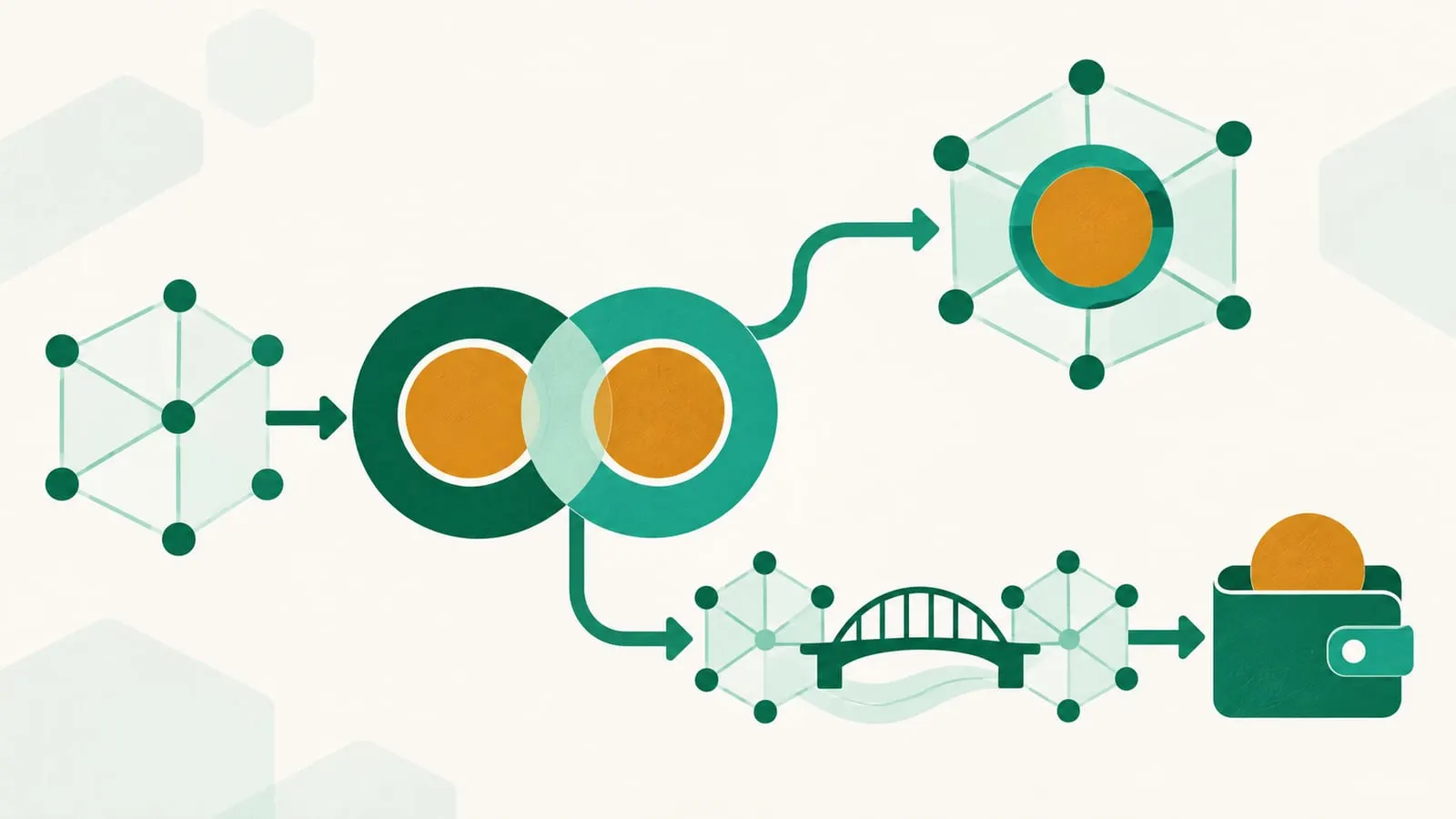
Yes, you can buy bitcoin on a decentralized exchange, but there’s an important catch. On most DEXs, including Uniswap, PancakeSwap and Solana’s Jupiter, what you buy is a wrapped or tokenized bitcoin such as WBTC or cbBTC: a token on another blockchain that tracks bitcoin’s price and is backed by BTC held by a custodian or bridge. To receive native BTC at a Bitcoin address without an exchange account, you need a cross-chain swap protocol or a peer-to-peer marketplace.
The reason is technical. The Bitcoin network doesn’t support the kind of smart contracts that AMM-style DEXs run on, so DEXs either trade a bitcoin token on a smart-contract chain or coordinate trades across chains.
Three ways to get bitcoin on a DEX
| Route | What you end up with | Examples | Main trade-off |
|---|---|---|---|
| Wrapped BTC on a regular DEX | A token on Ethereum, a layer 2, Solana etc. | WBTC, cbBTC, tBTC on Uniswap, Curve, Jupiter | Easy and liquid, but depends on a custodian or bridge |
| Cross-chain swap protocol | Native BTC sent to your Bitcoin address | THORChain, Chainflip | Real BTC, but thinner liquidity and protocol risk |
| Peer-to-peer marketplace | Native BTC from another person | Bisq | Can accept fiat, but slower with fewer offers |
1. Wrapped bitcoin on a regular DEX
Wrapped bitcoin tokens let BTC be used in DeFi. Common ones include:
- WBTC, the original ERC-20 bitcoin token. Approved merchants mint and burn it, and the backing BTC is held in custody with on-chain proof of reserves. In August 2024 BitGo announced it would move WBTC custody into a multi-jurisdictional arrangement with BiT Global, a Hong Kong trust company linked to Justin Sun; the move, completed in October 2024, drew criticism, and Coinbase suspended WBTC trading on December 19, 2024, saying it no longer met its listing standards. WBTC has announced further custody changes since, so check wbtc.network for the current arrangement.
- cbBTC, issued by Coinbase and backed by BTC it holds.
- tBTC, from the Threshold Network, which uses a decentralized network of signers rather than a single custodian.
Buying one is an ordinary swap: connect a wallet on the right network, choose USDC or ETH as the input and the bitcoin token as the output, check the contract address and confirm. Our guide on how to access a decentralized exchange walks through it.
The risk is that the token is only as good as its backing. If a custodian fails or a bridge is hacked, the token can trade below bitcoin or become hard to redeem. Read whether you can trust wrapped bitcoin before holding large amounts, and remember that you can’t send WBTC to a Bitcoin address; doing so typically means losing it.
2. Native BTC through a cross-chain swap
Cross-chain protocols hold liquidity on several blockchains and settle swaps between them. You send, say, ETH or USDC on Ethereum, and the protocol sends native BTC to the Bitcoin address you specify.
- THORChain runs pools of native assets secured by its own validator network. Its Q1 2026 report says BTC pairs continued to dominate activity, while total liquidity fell from about $88 million to $66 million over the quarter; DefiLlama showed THORChain’s DEX TVL at roughly $53 million in mid-November 2026.
- Chainflip is a cross-chain AMM run by its own validator network, which controls vaults on each supported chain (including native Bitcoin) through threshold signatures. It is much smaller, with roughly $10 million in AMM TVL on DefiLlama in mid-November 2026.
Many wallets and front ends route through these protocols, so you may use them without visiting their sites. Expect swaps to take longer than an on-chain DEX trade because the protocol waits for Bitcoin confirmations, and compare the quoted output against a regular exchange. Our page on THORSwap and cross-chain DEXs covers the model, and multichain bridging explains related risks.
3. Peer-to-peer marketplaces
Platforms such as Bisq, an open-source desktop app, match buyers and sellers of native BTC directly. In the classic Bisq protocol both sides lock a security deposit in a 2-of-2 multisig escrow while the fiat payment, such as a bank transfer, is made off-chain, with mediators and arbitrators for disputes. They’re one of the few decentralized ways to buy bitcoin with fiat money, but trading volume is small, trades can take hours or days to complete, and you must take care to avoid payment fraud.
Why most people still buy BTC on a centralized exchange
For a first purchase with dollars or euros, a regulated centralized exchange is usually simpler: deep liquidity, fiat deposits and customer support, at the cost of KYC and trusting the exchange while it holds your coins. Many people buy BTC there and then withdraw it to their own wallet. Compare both models in our DEX vs. CEX guide, and if you already hold coins on an exchange, see how to move crypto from a CEX to a DEX. Going the other way, from bitcoin into ether, is covered in how to convert bitcoin to Ethereum on a DEX.
What it costs
- Regular DEX swap: pool fee (often 0.05%–0.3% for major pairs), network gas and price impact.
- Cross-chain swap: protocol and liquidity fees, plus network fees on both chains, including a Bitcoin transaction fee for the outbound payment.
- Peer-to-peer: trading fees, plus whatever the seller charges above market price.
Always compare the final amount you receive across options rather than headline fees.
Risks
- Custodian and bridge risk for wrapped BTC.
- Wrong token or wrong network. There are many fake “BTC” tokens; verify the contract address from the issuer’s official site or a trusted explorer. Our page on fractional bitcoin also covers how tiny amounts are denominated.
- Wrong address format. Make sure the destination address is a Bitcoin address for native swaps, and an address on the right chain for wrapped tokens.
- Smart-contract and protocol risk. Cross-chain protocols have been exploited in the past; keep amounts proportionate.
- Phishing. Use bookmarked URLs and never share your seed phrase.
About the original community answers
The older answers on this page suggested buying “BTC” on Uniswap without explaining that this gives you a wrapped token, not bitcoin. That distinction matters, so they have been replaced by this guide. For more on the asset itself, see our bitcoin glossary entry, or browse the DEXs and AMMs guide.
Frequently asked questions
Is WBTC the same as bitcoin?
No. WBTC is an Ethereum token designed to be backed 1:1 by bitcoin held by custodians. It follows bitcoin's price, but you rely on the custodians and smart contracts to redeem it. You can't send WBTC to a regular Bitcoin address.
Can I buy bitcoin on Uniswap?
You can buy wrapped bitcoin tokens such as WBTC or cbBTC on Uniswap, not native BTC. They live on Ethereum or the layer 2 you're using and stay in your Ethereum-compatible wallet.
What DEX lets you trade native bitcoin?
Cross-chain protocols such as THORChain and Chainflip swap native BTC against assets on other chains, and peer-to-peer platforms such as Bisq let people trade BTC with each other. Liquidity on these is far smaller than on major centralized exchanges.
Can I buy bitcoin on a DEX with dollars?
Usually not directly. Most DEXs only swap crypto for crypto. You'd first buy a stablecoin or other crypto through an exchange or on-ramp, or use a peer-to-peer market where sellers accept bank transfers.
Do I need KYC to buy bitcoin on a DEX?
DEX smart contracts generally don't require identity checks, but buying the crypto you swap from usually does, and some front ends restrict certain countries. No KYC also doesn't mean anonymity; on-chain trades are public.
Sources
- WBTC: Wrapped Bitcoin official site
- BitGo: BitGo to move WBTC to multi-jurisdictional custody (August 2024)
- Unchained: WBTC completes shift to multi-jurisdiction custody model (October 2024)
- The Block: Coinbase to delist wBTC (November 2024)
- THORChain: Quarterly report Q1 2026
- Chainflip documentation
- Threshold Network: tBTC
- Bisq: decentralized peer-to-peer exchange
- DefiLlama: THORChain DEX (TVL)
- DefiLlama: Chainflip AMM (TVL)
Educational content, not financial advice. DeFi carries risk, including total loss of funds.