Proof of Ownership in Crypto: How to Prove a Wallet Is Yours
On this page
The short answer
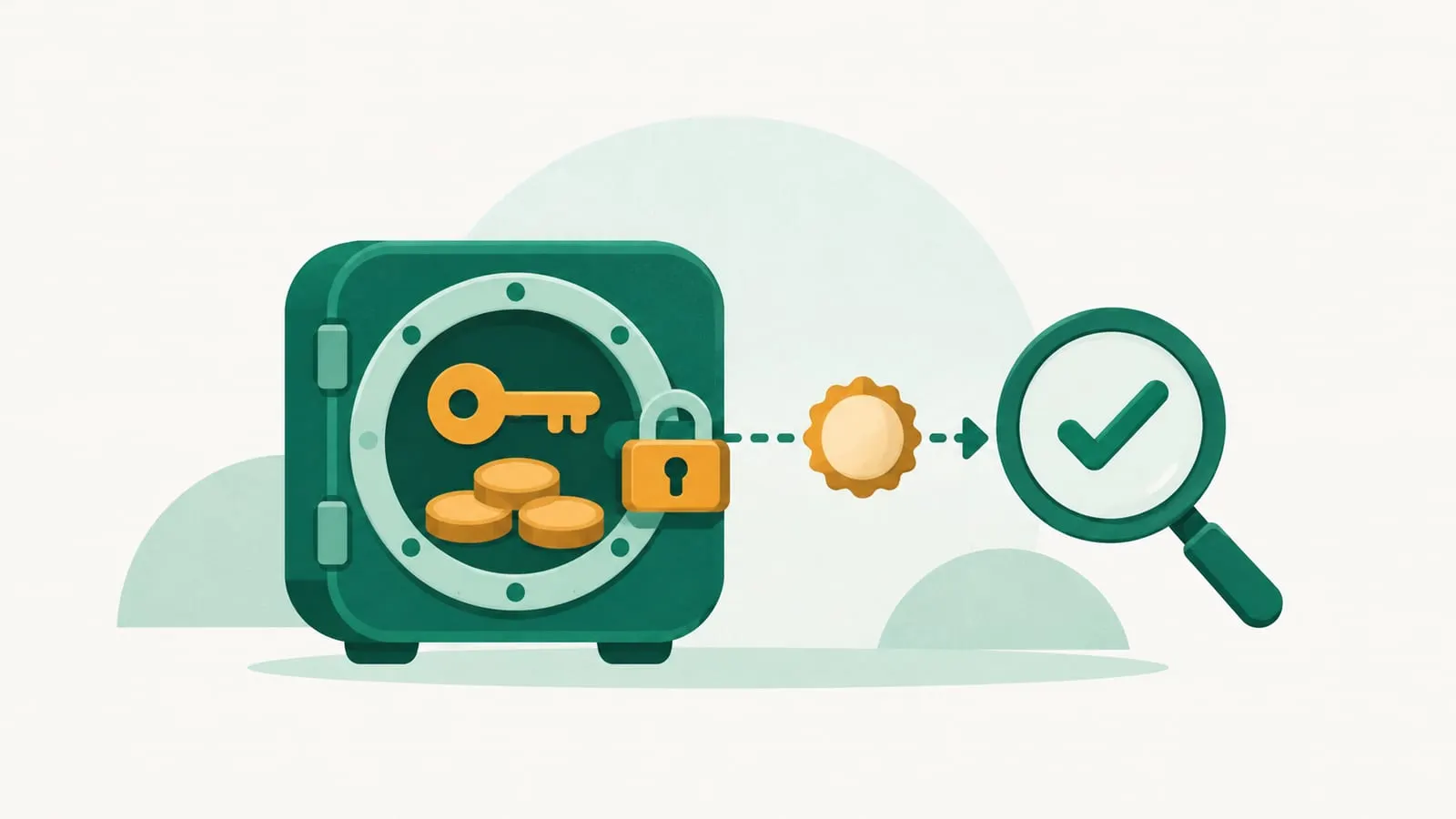
To prove you own a crypto wallet, you show that you control its private key without revealing it. The standard way is to sign a message with the wallet: the verifier picks a message, you sign it, and they check the signature against your public address. If a signature is not accepted, a small test transaction from the wallet to an address the verifier chooses also proves control. Exported statements and screenshots help document balances and history, but on their own they are easy to fake.
Why proving crypto ownership is different
With a bank account or shares, a central registry links an account to your name, so an institution can simply issue a statement. A blockchain has no such registry. A wallet address is a string derived from a public key, and the blockchain’s transparency means anyone can see what any address holds. What nobody can see is who controls it.
Control comes from the private key. Whoever has it can move the funds, so handing it over to prove ownership would defeat the purpose. Public-key cryptography solves this: the private key can produce a signature that anyone can verify with the matching public key or address, without learning the private key.
How to prove ownership of crypto: three methods
| Method | What it proves | How strong | Best for |
|---|---|---|---|
| Signed message | You control the private key of that address right now | Strong, if the message is fresh and specific | Exchanges, lenders, legal and audit requests |
| Test transaction | You can move funds from that address | Strong, but costs a small fee and is public | Exchanges that do not verify signatures, high-assurance checks |
| Statement or screenshot | What a wallet or account held and did over time | Weak alone, easy to edit | Supporting documents for tax, loans, source of funds |
1. Signing a message with your private key
This is the cryptographic proof built into blockchains.
- The verifier gives you a unique message, ideally including their name, your name and today’s date, such as: “I control address 0xAB…12 – for Example Lender – 16 Nov 2026”.
- You sign it in your wallet. The wallet uses your private key to produce a signature. Nothing is broadcast to the blockchain and no fee is paid.
- You send the message, your address and the signature.
- The verifier checks that the signature is valid for that message and address.
A common misunderstanding, repeated in many older guides, is that the verifier “encrypts” something with your public key and you decrypt it. Wallet signatures do not work that way. You sign with the private key, and anyone verifies with the public key. Nothing secret is exchanged.
On Ethereum and EVM chains, wallets sign plain-text messages using the format defined in EIP-191 (the personal_sign method). The standard deliberately adds a prefix so a signed message can never be a valid Ethereum transaction. Etherscan’s Verified Signatures tool lets you sign a message with a connected wallet, and lets anyone verify or publish a signature for an address.
On Bitcoin, the original “sign message” format (as in Bitcoin Core) works only for legacy P2PKH addresses that start with “1”. BIP-322 defines a generic signed-message format that works with newer address types, including SegWit and Taproot, and adds a proof-of-funds format that can show control of specific coins (UTXOs). Support varies by wallet, so check whether yours can sign for your address type before you promise a signature.
Make the message fresh and specific. A generic, undated signature could be reused by someone else to claim your address.
2. Making a test transaction
Here you send a small, exact amount (for example 0.00012345 BTC or a few dollars of a stablecoin) from the wallet in question to an address the verifier chooses, often your own account at their platform. Some exchanges call this a “Satoshi test”. Because only someone with the private key could have sent it, and the transaction is permanently recorded on-chain, it is hard to dispute.
Downsides: you pay a network fee, the link between your identity and the address becomes known to the verifier, and you must be sure the destination address is legitimate.
3. Exporting a statement
You can export transaction history and balances from a wallet, an exchange or a portfolio tool as a CSV or PDF, and some people have them notarized. This is useful for showing activity over time, but a statement says nothing about whether you control the keys today, and documents are easy to edit. Expect it to be accepted only alongside one of the first two methods.
When you need proof of crypto ownership
- Withdrawing to a self-hosted wallet. Exchanges that apply the “Travel Rule” may ask you to prove you own or control a self-hosted wallet before sending to it or crediting a deposit from it. In the EU, the Transfer of Funds Regulation (EU) 2023/1113, which has applied since 30 December 2024, requires providers to assess whether a self-hosted address is owned or controlled by their customer for transfers above EUR 1,000. Providers typically use a signed message, a wallet-connection check, a test transfer or, for smaller amounts, a self-declaration or screenshot, alongside their normal KYC verification. Some use automated flows such as the Address Ownership Proof Protocol (AOPP), though wallet support for it is limited.
- Borrowing against crypto. Lenders that take crypto as collateral may want to verify the wallet before the loan. See how to get a crypto-backed loan.
- Proof of funds and source of wealth. Banks, mortgage lenders and property buyers may ask where a deposit came from, especially if it was converted from crypto.
- Tax and accounting. Records of when and how you acquired coins support your tax reporting and cost basis.
- Legal matters. Divorce, inheritance, bankruptcy claims or theft reports can all require showing which addresses are yours.
- OTC trades and NFT sales. Counterparties may ask for a signature before a large private trade.
Each institution decides what it will accept. Ask in advance which method and which format they need.
What to prepare
Requirements vary, but expect to provide some combination of:
- Your full name, address and a government-issued ID (for the institution’s KYC, not the blockchain)
- The wallet address or addresses in question
- A signed message from each address, or a test transaction
- A statement or export of balances and transaction history
- For larger amounts, an explanation of how you acquired the crypto
Risks and red flags: “wallet verification” scams
Proving ownership is a favorite pretext for scammers. Watch for these:
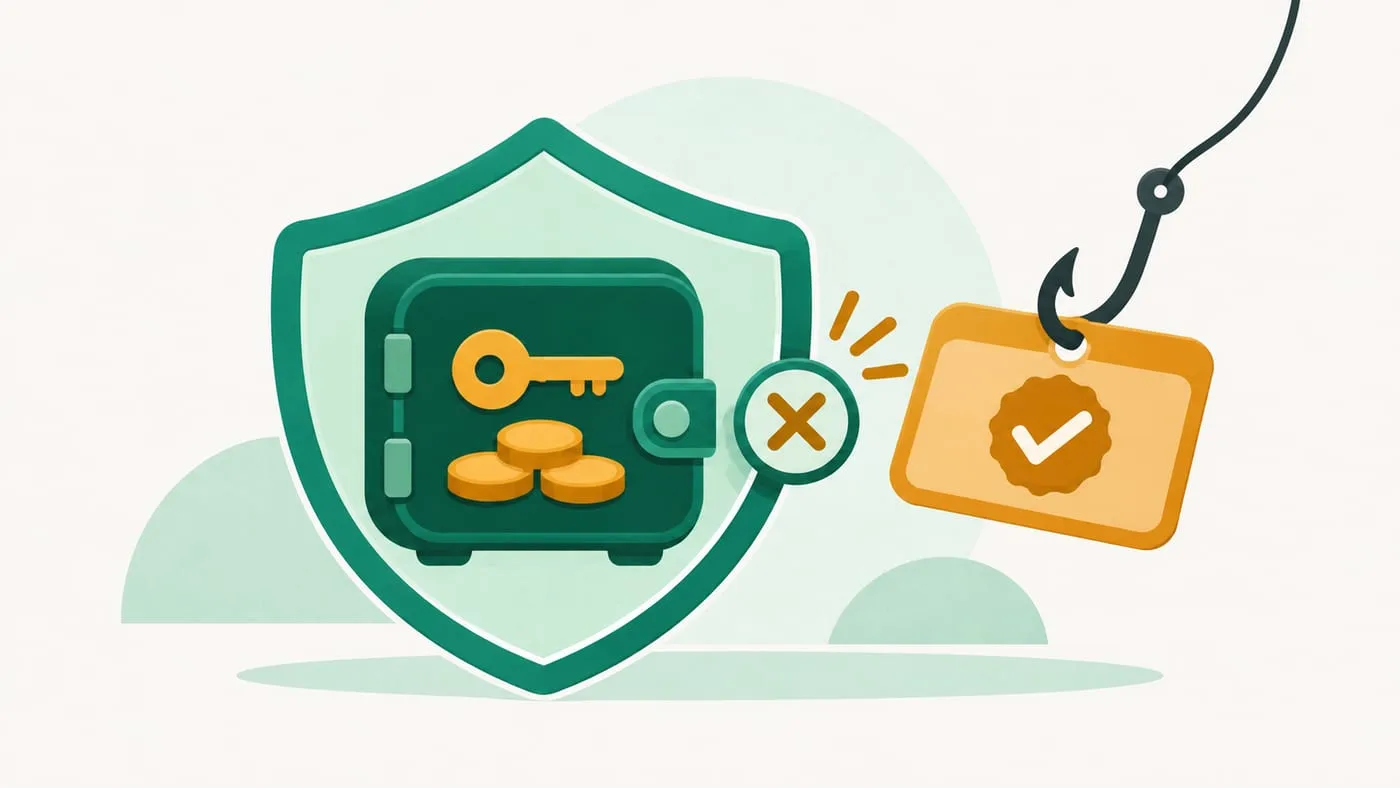
- Requests for your seed phrase or private key. No legitimate exchange, lender, bank or government body ever needs them. Anyone asking is trying to steal your funds.
- “Validate your wallet” links sent by email, DM or social media that lead to a site asking you to connect your wallet.
- Signatures that are not plain text. If a “verification” pop-up asks you to approve token spending, sign a permit or typed data you cannot read, or confirm a transaction that moves funds, reject it. Approvals and permits can let a scammer drain your tokens later.
- Pay-to-verify demands. Fees to “unlock” or “verify” a wallet before a withdrawal are a hallmark of scams, as in the fake liquidity mining scam.
- Test transactions to an address given by a stranger. Send test amounts only to addresses shown inside the platform you are logged into.
If you signed something suspicious, move remaining funds to a new wallet and revoke token approvals.
Proof of ownership vs. proof of reserves
“Proof of reserves” is a related idea at the exchange level. A custodial platform publishes evidence, often signed messages or on-chain address lists plus a cryptographic summary of customer balances, to show it holds the assets it owes customers. It is the institutional version of the same principle: proving control of keys without giving them away. Like an individual’s statement, it is a snapshot and does not by itself show the platform’s liabilities are fully covered.
Related reading
- What is a DeFi wallet? and the broader crypto wallet hub
- Hot vs. cold wallets
- TradFi vs. DeFi
Frequently asked questions
How do I prove I own a crypto wallet?
Sign a message chosen by the person asking (ideally including the date and their name) with your wallet, then give them the message, your address and the signature to verify. If they do not accept signatures, send a small, exact test amount from the wallet to an address they specify.
Can I prove ownership without giving my private key?
Yes. That is exactly what digital signatures are for. Your private key creates the signature, and anyone can verify it with your public address, without learning the key.
Does a wallet address alone prove ownership?
No. Anyone can look up any address on a block explorer. An address shows what the wallet holds, not who controls it.
What is a Satoshi test?
It is a verification where you send a tiny, specific amount of crypto from the wallet you claim to own, proving you can move funds from it. Some exchanges use it before allowing withdrawals to a self-hosted wallet.
Is it safe to sign a message to prove ownership?
Signing a plain-text message is safe if the wallet shows readable text and no transaction. Be suspicious of any "verification" that asks you to approve tokens, sign a permit or connect to an unfamiliar site.
Sources
- EIP-191: Signed Data Standard
- BIP-322: Generic Signed Message Format (Bitcoin)
- Etherscan: Verified Signatures tool
- EUR-Lex: Regulation (EU) 2023/1113 on transfers of funds and crypto-assets
- European Banking Authority: Travel Rule guidelines (application date 30 Dec 2024)
- ethereum.org: Ethereum accounts (public and private keys)
- Revoke.cash: What are token approvals?
Educational content, not financial advice. DeFi carries risk, including total loss of funds.