Is Trust Wallet a CEX or a DEX? What It Actually Is and How It Works
On this page
Hi, I've been looking at some crypto wallets and exchange options since there has been so much discussion in the crypto space about choosing trading platforms. I came across Trust Wallet in those chats and it caught my attention. The issue is that I don’t really understand it or how it works. Is trust wallet a blockchain? How does it work?
Short answer
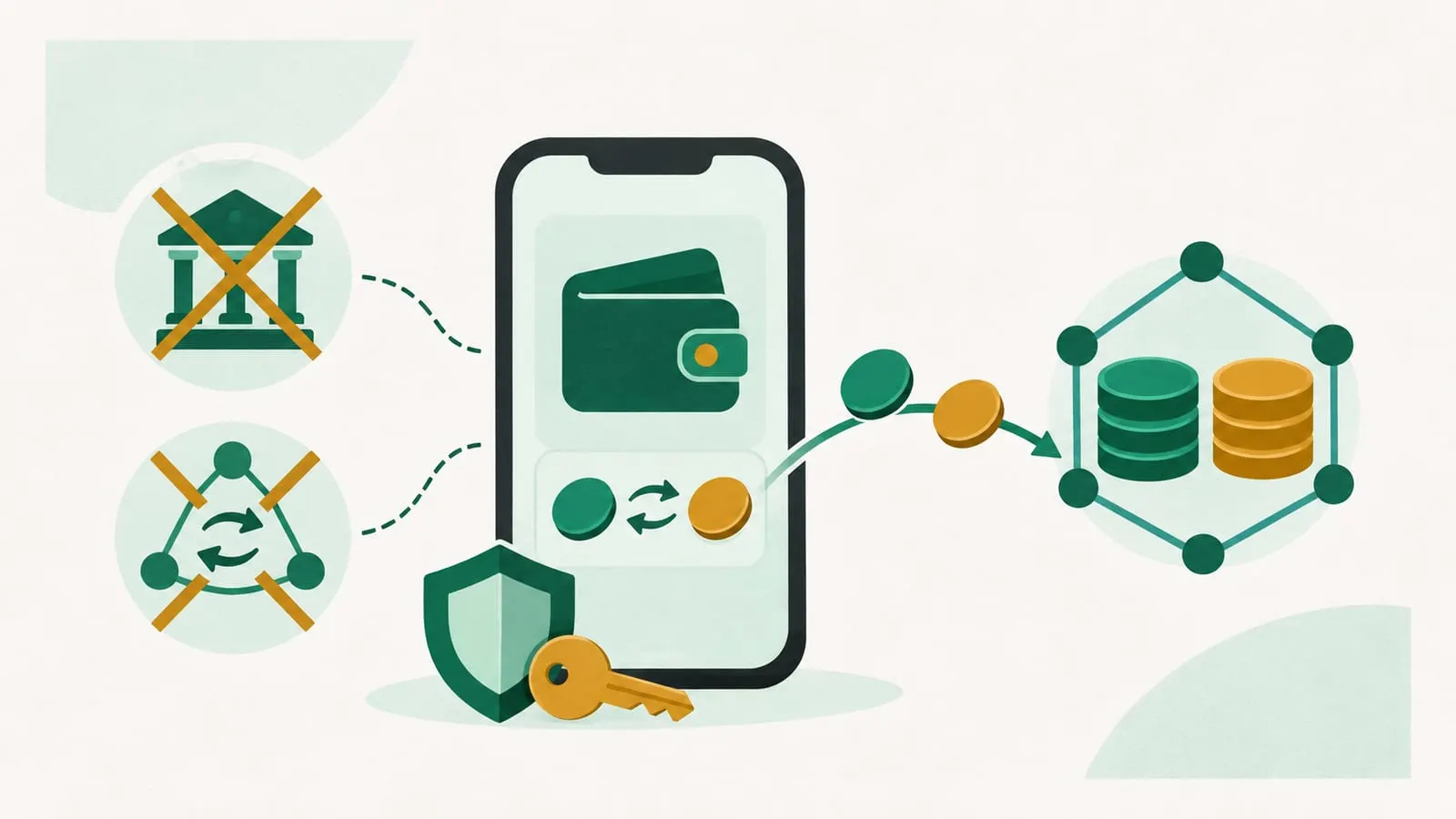
Trust Wallet is neither a CEX nor a DEX. It’s a self-custody (non-custodial) crypto wallet. It stores the keys to your crypto on your phone or in your browser, and lets you send, receive, swap and connect to decentralized apps. When you swap tokens inside Trust Wallet, the trade goes through DEXs and other third-party providers. So it’s closest to “a wallet with a DEX front end built in”, not an exchange in its own right.
It isn’t a blockchain either. Trust Wallet says it supports more than 100 blockchains, including Bitcoin, Ethereum, Solana, BNB Smart Chain, Polygon, Arbitrum, Base, TRON and TON.
CEX vs DEX vs wallet
| Centralized exchange (CEX) | Decentralized exchange (DEX) | Trust Wallet | |
|---|---|---|---|
| What it is | A company that runs an order book and holds customers’ funds | Smart contracts that let users trade from their own wallets | A wallet app that holds your keys |
| Who holds your crypto | The exchange | You (funds sit in your wallet until you trade) | You |
| Account and KYC | Required | None | None for the wallet itself; third-party buy providers may require it |
| How trades happen | Matched in the exchange’s order book | Against a liquidity pool or on-chain order book | Routed to DEXs and third-party providers |
| If you lose access | Account recovery through support | You need your recovery phrase | You need your recovery phrase |
| Examples | Binance, Coinbase, Kraken | Uniswap, PancakeSwap, Curve | Also: MetaMask, Phantom, Rabby |
For the bigger picture, see our DEX vs CEX comparison and the glossary entry on DEX vs CEX.
Why people think Trust Wallet is an exchange
There are three common reasons:
- The Binance connection. Binance acquired Trust Wallet in 2018, and the two are often mentioned together. But Trust Wallet is a separate product: you don’t need a Binance account, and Binance doesn’t hold your Trust Wallet funds.
- The Swap button. Trust Wallet advertises swapping “millions of tokens across 100+ blockchains”. Behind that button, independent third-party providers fill the trade. Trust Wallet says it doesn’t control these services. The liquidity mostly comes from DEXs and aggregators, which is why swapping in Trust Wallet looks and behaves like using a DEX.
- The Buy button. Buying crypto with a card or bank transfer happens through third-party on-ramp providers. They are regulated payment or exchange businesses with their own fees and identity checks, not Trust Wallet.
How Trust Wallet works
- You create or import a wallet. The app generates a recovery phrase (seed phrase), a list of words that can rebuild your private keys. Trust Wallet doesn’t hold a copy, so whoever has the phrase controls the funds.
- The keys stay on your device. Each blockchain gets its own address derived from those keys. Your crypto stays on the blockchain, and the wallet just proves you control it.
- You sign transactions. Sending, swapping, staking or using a dApp all require you to approve a transaction, which is broadcast to the network. You pay that network’s gas fee.
- dApps connect to your wallet. On mobile or through the browser extension, you can connect to DeFi apps, NFT marketplaces and games. This is how you’d access a decentralized exchange directly.
For background on wallet types, see crypto wallets explained and our DeFi wallet guide.
What Trust Wallet costs
- Download and storage: free.
- Network fees: paid to the blockchain on every transaction, not to Trust Wallet.
- Swaps: Trust Wallet’s comparison pages list a 0.7% swap fee, included in the quoted rate and shown before you confirm. It has run 0% fee promotions on some pairs, such as selected stablecoin swaps on the same chain (not on Ethereum) and some staked or wrapped asset pairs. Third-party providers may add their own fees, and the quote also includes slippage and price impact.
- Buying crypto: on-ramp providers set their own fees and spreads.
If cost matters, compare the final amount you’ll receive with a quote from a DEX or DEX aggregator. The wallet’s convenience fee can be larger than the network fee on small trades.
Is Trust Wallet safe?
Self-custody removes one big risk: an exchange going bust or freezing withdrawals while holding your coins. It replaces that with others you have to manage yourself.
- Recovery phrase security. Anyone who gets your phrase can empty the wallet, and nobody can reverse it. Never type it into a website, chat or “support” form. Trust Wallet staff will not ask for it.
- Compromised software. On 24 December 2025, a malicious version of the Trust Wallet Chrome extension (v2.68) was published to the Chrome Web Store outside Trust Wallet’s normal release process. Trust Wallet said the attack was likely linked to developer GitHub secrets exposed in the November 2025 Sha1-Hulud supply-chain attack, which gave the attacker a Chrome Web Store API key. Early reports put losses at about $7 million; Trust Wallet’s later update said about $8.5 million was drained from 2,520 wallet addresses. Estimates vary. Mobile apps and other extension versions weren’t affected. Trust Wallet said it would reimburse affected users and released v2.69, a rollback to the clean v2.67.
- Malicious approvals and fake tokens. Signing a token approval for a scam dApp can let it drain that token. Revoke approvals you no longer need, and ignore unsolicited tokens or airdrops. See how safe is a DeFi wallet?
- Phishing apps and sites. Install only from official app stores or trustwallet.com.
For larger balances, many people pair a software wallet with a cold wallet. Our hot vs cold wallets guide explains the trade-off.
Moving funds from an exchange to Trust Wallet
- In Trust Wallet, choose the coin and copy its receiving address for the exact network you’ll use (for example, USDT on Ethereum vs USDT on TRON).
- On the exchange, withdraw to that address and select the same network.
- Send a small test amount first, then the rest.
More detail is in can I transfer crypto from a CEX to a DEX?
Risks to keep in mind
- No account recovery. Lose the phrase and the device, and the funds are gone.
- Swap pricing. The built-in fee and third-party routing can make small swaps expensive compared with going to a DEX directly.
- Scam tokens and dApps. A wallet will show any token that’s sent to it, and some are designed to lure you into signing malicious transactions. Our crypto scam red flags cover the common tricks.
- Staking. Trust Wallet notes that staking rewards are variable and not guaranteed, and staked assets can be locked for a period.
Browse more wallet guides in the wallets and security section.
Frequently asked questions
Is Trust Wallet a decentralized exchange?
No. It's a non-custodial wallet with a built-in swap feature. The swap routes your trade through DEXs and other third-party liquidity providers; Trust Wallet itself doesn't match buyers and sellers.
Is Trust Wallet owned by Binance?
Binance acquired Trust Wallet in 2018, but the wallet is separate from the Binance exchange. You don't need a Binance account, and Binance doesn't hold the funds in your Trust Wallet.
Is Trust Wallet a blockchain?
No. A blockchain is the network that records transactions. Trust Wallet is software that stores your keys and lets you sign transactions on more than 100 blockchains.
Can I send crypto from an exchange to Trust Wallet?
Yes. Copy your Trust Wallet receiving address for the right network, withdraw from the exchange to that address, and send a small test amount first. Sending on the wrong network can lose the funds.
Does Trust Wallet charge fees?
The wallet is free to download and holding crypto is free. Swaps include a Trust Wallet fee (listed as 0.7%, with 0% promotions on some pairs) built into the rate, and every transaction pays the blockchain's network fee. Buying with a card goes through third-party providers that set their own fees.
Sources
- Trust Wallet: official site (product overview)
- Trust Wallet vs Coinbase Wallet (2026): fees, chains and security
- Trust Wallet: swap selected stablecoins with 0% fees
- Trust Wallet: Browser Extension v2.68 incident community update
- The Block: Trust Wallet launches compensation process for $7 million browser extension hack victims
Educational content, not financial advice. DeFi carries risk, including total loss of funds.