How to Judge the Safest Yield Farming Platforms in 2026 (and Why "Most Profitable" Is a Trap)
On this page
The short answer
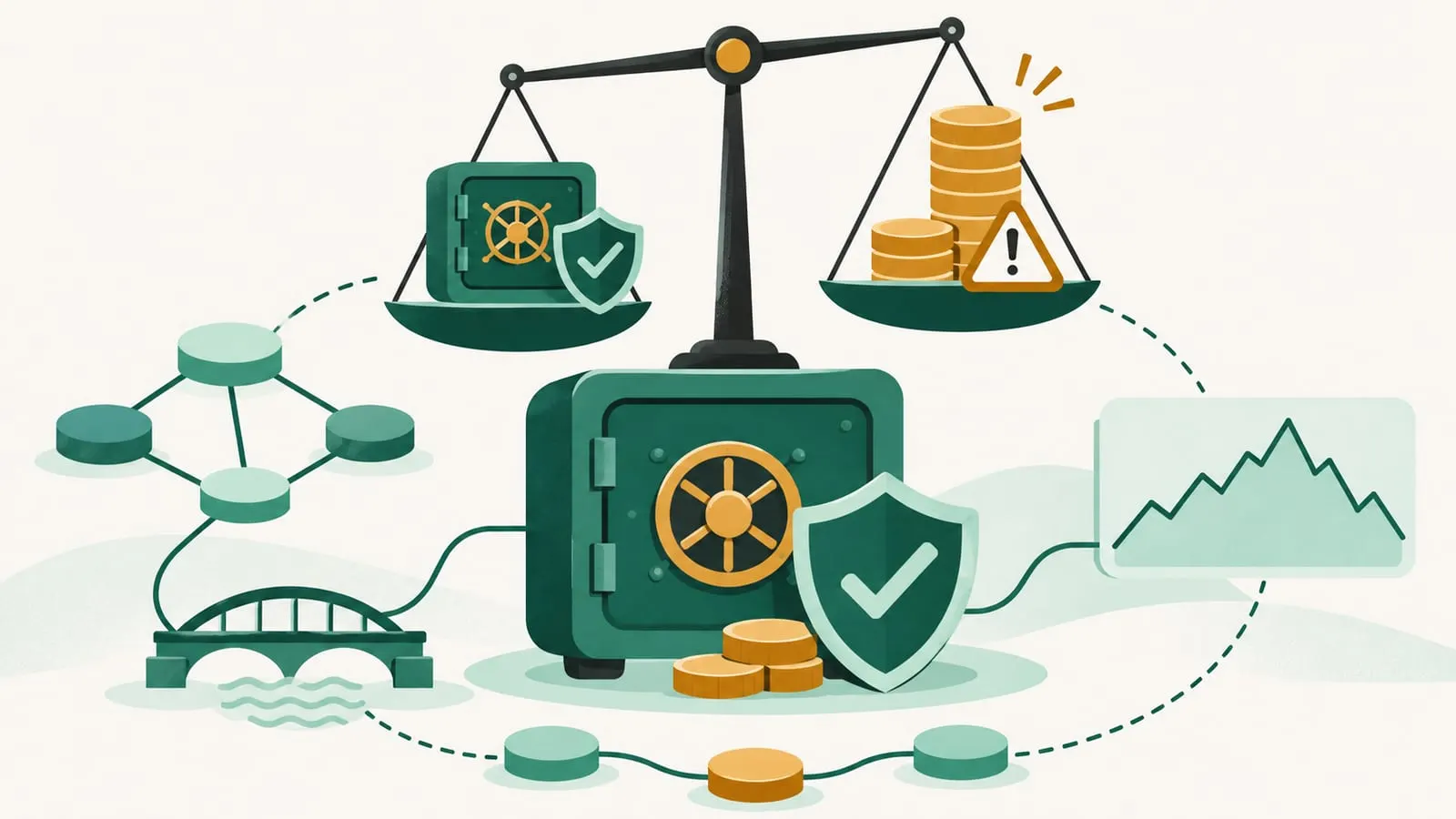
There is no yield farming platform that is safe the way an insured bank deposit is. What you can do is judge how much risk a platform carries, and where. The most useful signals are a long track record holding large deposits, multiple audits, a yield you can trace to real activity, limited admin powers and few risky dependencies. Platforms that score well on these tend to pay modest rates: as of mid-November 2026, the largest Ethereum stablecoin lending and savings markets paid roughly 3–4.5% base APY on DefiLlama.
That is why “safest” and “most profitable” rarely describe the same platform. This page replaces our 2022 list with a way to evaluate safety yourself, using dated examples. It is not a ranking and not investment advice.
What happened to the 2022 list?
The 2022 version of this page listed seven platforms, mixing DeFi protocols with centralized companies. Its fates make the point better than any checklist:
- BlockFi, which advertised up to 9.25% APY on USDT, froze withdrawals and filed for bankruptcy in November 2022, months after the list was published. Customers became creditors.
- Aave, Uniswap and SushiSwap are still operating in 2026. Aave has grown into the largest DeFi lending protocol and launched V4 in March 2026.
- eToro’s staking was never yield farming: it is a custodial staking product, so you rely on the company.
- The list also included two smaller yield apps, YieldShield and AQRU. AQRU’s operator later cut its yields sharply and raised its minimum deposit; we could not confirm either app’s current status, so we don’t point readers to them.
The lesson: a platform’s longevity, custody model and yield source matter far more than its advertised rate.
Seven questions that separate safer platforms from riskier ones
1. How long has it held serious money?
Code that has held billions for years without a major loss has survived real attacks. New forks and freshly launched contracts haven’t. Check launch date and total value locked history on DefiLlama, and look at the trend, not just today’s number.
2. Who audited it, and is there a bug bounty?
Look for several audits from recognized firms, a public bug bounty and audit reports that cover the version you are using. Audits help but are not a guarantee: Balancer V2, live since 2020 and audited, lost about $128 million across several chains on 3 November 2025 (DefiLlama’s figure; Balancer’s own post-mortem put the theft of user funds at about $94.8 million). Our guide to smart contract audit firms explains how to read an audit.
3. Where does the yield come from?
Safer yields come from borrower interest, trading fees or staking rewards. Yields that come mostly from newly printed reward tokens fade when token prices fall or emissions end. If a platform can’t explain its yield, or the answer is “new deposits,” treat it as a red flag. Dashboards such as DefiLlama split base from reward APY; start from base.
4. Who holds your funds?
On a DeFi protocol you keep custody in your own wallet and the contract holds the pool. On a centralized platform, the company holds your coins. The 2022 failures of Celsius, Voyager and BlockFi were custody failures, not code failures.
5. What does it depend on?
Every collateral token, oracle, bridge and vault manager a platform relies on is another way to lose money. In November 2025, Stream Finance disclosed that an external fund manager had lost about $93 million; its xUSD synthetic dollar collapsed and losses spread to lending markets that had accepted it. In April 2026, an exploit of Kelp DAO’s rsETH bridge (about $292 million) left lenders that accepted rsETH, including Aave, facing bad debt even though their own contracts were not hacked.
6. Who can change the rules?
Check whether contracts are upgradeable, who holds admin keys, whether changes go through a timelock and how governance votes work. A small multisig that can upgrade contracts instantly is a single point of failure.
7. Can you get out?
Look for lock-ups, cooldowns, withdrawal queues and pool utilization. A lending pool that is almost fully borrowed can’t return your deposit until borrowers repay.
Safety by platform type
Rather than a ranking, here is how the main categories typically compare. Individual protocols within each category vary widely.
| Platform type | Examples (operating Nov 2026) | Typical risk profile | Main ways it goes wrong |
|---|---|---|---|
| Blue-chip lending, single asset | Aave, Compound, Morpho | Lower to moderate | Bad debt from collateral, smart contract bugs, utilization freezes |
| Liquid staking | Lido, Rocket Pool, Jito | Lower to moderate | Slashing, token trading below its value, contract bugs |
| Savings tokens | Sky’s sUSDS | Moderate | Governance rate cuts, issuer risk |
| Stablecoin DEX pools | Curve | Moderate | Depegs leave LPs holding the weaker coin |
| Volatile-pair DEX pools | Uniswap, Aero | Moderate to high | Impermanent loss, reward-token collapse |
| Optimizer vaults | Yearn, Beefy | Moderate to high | Stacked contract and strategy risk |
| Restaking, synthetic dollars | EigenLayer-based tokens, Ethena sUSDe | Moderate to high | Slashing, bridges, negative funding |
| Leveraged farming, new forks | Various | High | Liquidation, rug pulls, untested code |
For examples and rates within each category, see our guide to choosing a yield farming platform and the overview of yield farming strategies.
Why “most profitable” is a trap
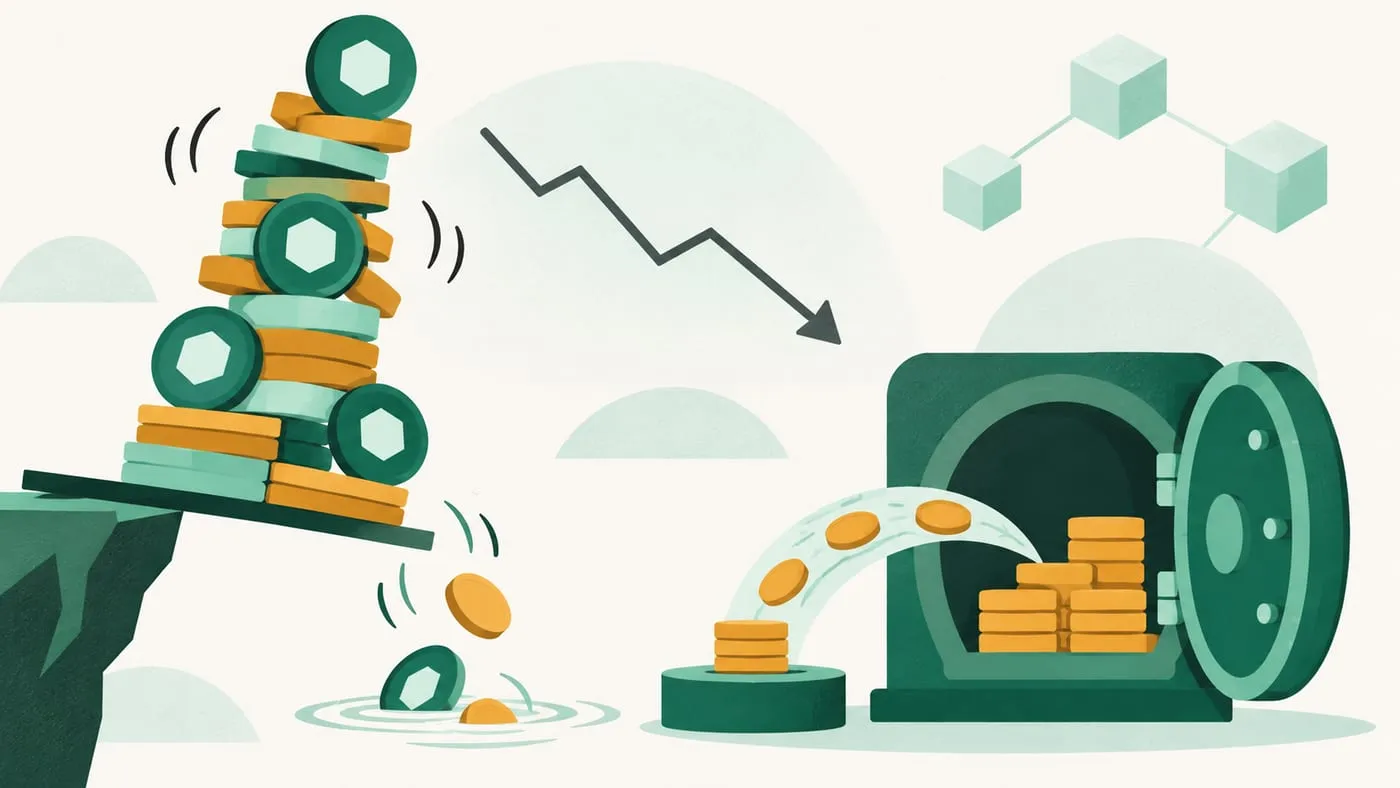
High APYs come from somewhere. In practice, the biggest numbers on yield dashboards usually come from one of these:
- Reward tokens that the market sells as fast as they are printed.
- Leverage, which multiplies gains and losses and adds liquidation risk.
- Small, new or volatile pools, where impermanent loss can exceed the fees.
- Undisclosed risk, from credit to centralized strategies.
A 20% APY paid in a token that falls 60% loses money. Before comparing headline rates, work out the base yield and what the reward token’s price is doing. Our explainer on what APY means in crypto covers how the numbers are calculated.
Red flags of an unsafe platform
- Fixed or “guaranteed” daily returns.
- Anonymous team, no audits, unverified contracts.
- Referral bonuses for bringing in new depositors.
- Unlimited token approvals requested for unclear reasons.
- Social media pressure to “ape in” before rewards end.
- Withdrawal fees or lock-ups that appear after you deposit.
If you think you’ve already been caught, see how to tell if you’re a victim of a liquidity mining scam.
Risks that remain on every platform
Even the most careful choice leaves some risk. DefiLlama’s hacks database records about $1.2 billion taken from DeFi protocols in 2026 as of mid-November, including exploits at long-running projects. Other risks include depegs, oracle failures, governance attacks, regulatory changes and taxes. Our full guide to the risks of yield farming covers each one, and decentralized insurance explains what on-chain cover can and can’t protect.
A practical routine
- Start with the asset you already want to hold.
- Shortlist long-running platforms in the matching category.
- Check base vs. reward APY, TVL trend and incident history on DefiLlama.
- Read the docs on admin keys, dependencies and withdrawal rules.
- Deposit a small amount, test a withdrawal, then size the position as if you could lose it.
- Spread funds across more than one protocol.
More guides are in the yield farming and staking hub.
Frequently asked questions
What is the safest yield farming platform?
There isn't one that is safe outright. Lower-risk choices tend to be single-asset deposits into long-running, heavily audited lending markets or liquid staking protocols, without leverage, but even established protocols have been exploited.
Which yield farming platform is the most profitable?
The highest APYs are usually short-lived: new pools, small tokens, leverage or incentive tokens that lose value. Profit depends on what remains after token price changes, impermanent loss, gas and any losses, not on the headline rate.
Are audited platforms safe?
Audits lower the chance of known bug classes but don't rule out exploits. Balancer V2, an audited protocol live since 2020, lost about $128 million in November 2025, according to DefiLlama (Balancer's own post-mortem put the theft of user funds at about $94.8 million).
Is DeFi safer than centralized yield platforms?
They fail differently. DeFi carries smart contract and key-management risk you handle yourself; centralized platforms carry custody and insolvency risk, as the 2022 bankruptcies of Celsius, Voyager and BlockFi showed.
Sources
Educational content, not financial advice. DeFi carries risk, including total loss of funds.