1inch Review (2026): How the DEX Aggregator Works, Fees, Safety and Alternatives
On this page
1inch in 2026: the short version
1inch is still live and is one of the most widely used DEX aggregators. Instead of being an exchange, it searches many decentralized exchanges and market makers, then routes or splits your trade to get the best net price. You trade from your own wallet, so 1inch never holds your funds. Its website lists more than $817 billion in swap volume, 250 million+ swaps and 27 million+ connected wallets.
Much has changed since the original version of this review in 2022. Many swaps now go through Fusion, an intent-based auction. Cross-chain swaps come through Fusion+. Solana is supported. And the CHI gas token the old review recommended no longer works as designed. 1inch has also published an infrastructure fee of up to 0.30% that can apply to swaps in its own interfaces, so the old “no trading fees” line is out of date.
Pros and cons
| Pros | Cons |
|---|---|
| Compares many liquidity sources, often beating any single DEX on larger trades | Infrastructure fee of up to 0.30% may apply in 1inch’s own interfaces |
| Fusion mode: resolvers pay gas, and the design aims to protect orders from front-running | Fusion orders can fail to fill in fast markets |
| Non-custodial, with no account or KYC | Token approvals and complex routing add smart contract risk |
| 17 networks including Solana, plus cross-chain swaps | No fiat on-ramp of its own; you need crypto in a wallet first |
| Limit orders, portfolio tracker and a mobile wallet | Advanced settings can confuse beginners |
How 1inch works
Classic swap
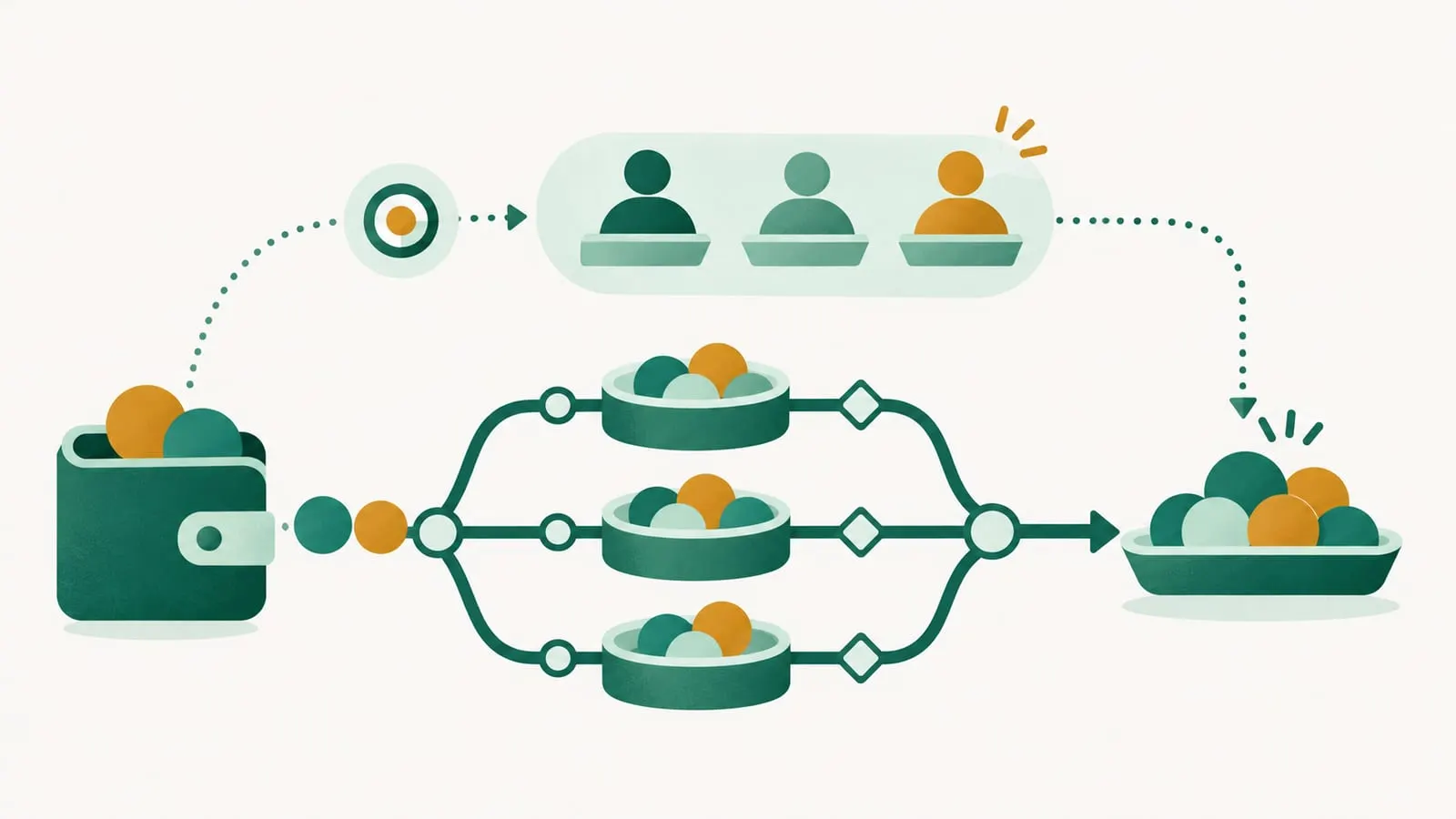
Classic swap (called Market mode in 1inch’s current help pages) is the original aggregator. Its routing algorithm checks prices across many DEXs, such as Uniswap, Curve, Balancer and PancakeSwap depending on the chain. It can split one order across several pools and routes to cut slippage and price impact. You submit the transaction yourself and pay the network’s gas fee. The trade executes immediately, within your slippage tolerance.
Example: swapping a large amount of ETH for USDC in one pool might push the price several percent against you. 1inch might send 60% through one pool, 30% through another and 10% through a third, giving a better average price. The extra gas from a multi-pool route is worth it only when the price improvement outweighs it, which is one reason aggregators matter most on larger trades.
Fusion mode
Fusion turns your swap into a signed order rather than a transaction:
- You sign an order with the tokens, the amount and a worst acceptable price (your slippage limit).
- The order goes to resolvers, approved professional market makers that have staked 1INCH.
- A Dutch auction starts. The rate you’re offered starts high and falls over time until a resolver fills it, it reaches your limit, or the order expires.
- The resolver that fills the order pays the gas. If the order expires, you can resubmit at no cost, and nothing is charged for failed or expired orders.
Because resolvers settle the trade rather than you broadcasting a swap to the public mempool, Fusion is designed to prevent front-running and other MEV. You also don’t need the chain’s native token for gas. The trade-off: a resolver only fills when it’s profitable for them, so in a fast-moving market your order may not fill. 1inch says the quoted rate can look lower than Classic, but after gas, Fusion often returns more.
Fusion+ (cross-chain)
Fusion+ lets you swap between chains, such as USDC on Arbitrum for SOL on Solana, without bridging manually. A resolver wins a Dutch auction, then locks funds in escrow contracts on both chains, linked by a secret. Once both escrows check out, the secret is revealed and each side receives its assets. If something stalls, the escrows time out and funds return to their owners. Resolvers pay the gas on both chains. Keep the app open until the swap completes.
Other products
- Limit orders through the 1inch Limit Order Protocol. See limit orders on DEXs for when they help.
- 1inch Wallet, a mobile self-custody wallet.
- Portfolio, which tracks balances and P&L across chains.
- Business APIs that power swaps in many other wallets and apps. If you’ve swapped in a third-party wallet, there’s a fair chance 1inch did the routing.
Fees
| Cost | Classic swap | Fusion / Fusion+ |
|---|---|---|
| Network gas | You pay | Resolver pays, priced into your rate |
| 1inch infrastructure fee | 0–0.05% stable pairs, 0–0.30% other pairs (may apply) | Same |
| Underlying DEX pool fees | Included in the quote | Included in the quote |
| Failed or expired trade | Gas is lost if a transaction reverts | Free |
1inch’s documentation says all its interfaces, including the dApp and 1inch Wallet, “may incur infrastructure fees” in those ranges. The fee is deducted from the amount you receive. It doesn’t publish exactly when each rate applies, so compare the final “you receive” figure, not the headline rate, against another aggregator or DEX before you confirm. Token approvals can still cost gas in any mode.
What happened to the CHI gas token?
CHI worked by storing data on-chain when gas was cheap and deleting it when gas was expensive, to collect a gas refund. Ethereum’s London upgrade in August 2021 included EIP-3529, which sharply cut those refunds and made gas tokens like CHI and GST2 largely useless. Ignore any guide that tells you to buy or activate CHI.
Supported networks and wallets
In November 2026, 1inch’s site lists 17 networks: Ethereum, BNB Chain, Polygon, Optimism, Arbitrum, Gnosis, Avalanche, zkSync Era, Base, Linea, Unichain, Sonic, Solana, Robinhood Chain, Monad, Cronos and HyperEVM. Availability of Fusion, Fusion+ and limit orders varies by chain.
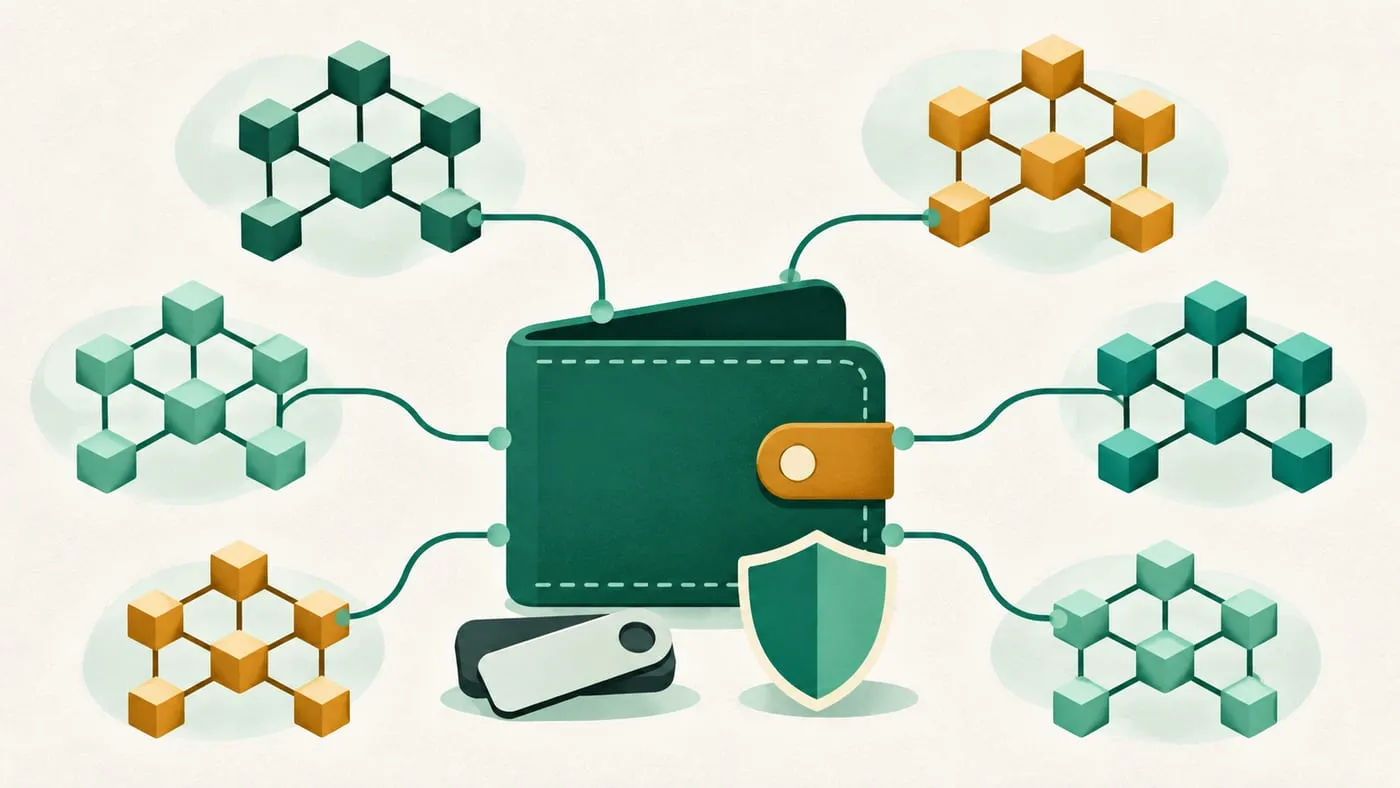
You connect a self-custody wallet, such as MetaMask, Rabby, Phantom (for Solana), a hardware wallet, any WalletConnect wallet or 1inch’s own wallet. See how to access a decentralized exchange for the setup.
The 1INCH token
1INCH is 1inch’s governance token, with a maximum supply of 1.5 billion. Staking it gives “Unicorn Power” for DAO voting. Resolvers must hold staked 1INCH, and 1inch’s help center says resolver eligibility requires at least 5% of total Unicorn Power. You don’t need 1INCH to swap. This review doesn’t assess 1INCH as an investment.
Security record
- March 2025 resolver exploit. On 5 March 2025, an attacker exploited a bug in the obsolete Fusion v1 settlement contract. The bug affected only resolver contracts that still included that old code. Commonly cited losses are about $5 million, taken from resolvers, not users. 1inch says “no end users were affected”, and security firms report that most of the funds were returned after negotiation, minus a bounty kept by the attacker.
- May 2026 TrustedVolumes exploit. TrustedVolumes, a market maker that acts as a Fusion resolver, lost roughly $5.9 million (its own accounting reportedly put it nearer $6.7 million) through a custom swap contract it built and controlled. Rekt describes it as TrustedVolumes’ own contract, not a 1inch contract, and the losses came from the market maker’s inventory. In July 2026 the attacker reportedly returned about 1,122 ETH (roughly $2 million) and kept a similar amount as a self-declared bounty; we found no report that the rest was returned. It’s a reminder that Fusion relies on third-party resolvers with their own code.
- Approvals. Like any aggregator, 1inch asks you to approve its router to spend your tokens. Older versions defaulted to “infinite” approvals. Approve only what you need where possible, and revoke old approvals.
- Phishing. Fake 1inch sites and airdrop scams are common. Use the official site or app, and never enter your recovery phrase anywhere.
How 1inch compares
| Alternative | Type | Notable for |
|---|---|---|
| CoW Swap | Intent-based aggregator | Batch auctions and MEV protection on Ethereum and major EVM chains |
| Matcha / 0x-powered apps | Aggregator | 0x routing, used in many wallets |
| Velora (formerly ParaSwap, renamed April 2025) | Aggregator | Multi-chain routing with its own intent-based mode |
| Jupiter | Aggregator | The main router on Solana |
| Uniswap app | DEX with routing | Routes across Uniswap pools and some outside liquidity |
For a broader view, see which is the best decentralized exchange platform? and our review of the DexGuru trading terminal, which routes swaps through 1inch and other aggregators.
Risks
- Smart contract risk. Routers, resolvers and the underlying DEXs can all have bugs, as the 2025 incident showed.
- Price and slippage. Aggregation reduces slippage but doesn’t remove it. See how to calculate slippage as a percentage.
- Unfilled orders. Fusion and limit orders can expire without filling.
- Scam tokens. 1inch lists tokens from many sources, so verify the contract address before you buy anything obscure. See crypto scam red flags.
- Cross-chain complexity. Fusion+ relies on escrows and time-locks across two chains, so read the confirmation carefully and keep the app open.
Verdict
1inch remains a long-running option for getting a competitive swap price across many DEXs, especially on larger trades and on Ethereum, where Fusion’s gas handling and MEV protection matter most. Its biggest changes since 2022 are the infrastructure fee and the move to resolver-filled orders. Always check the final amount you’ll receive, and compare it with at least one other aggregator for big trades. More guides are in the DEXs and AMMs section.
Frequently asked questions
Is 1inch legit?
Yes. 1inch has operated since 2019 and says it has processed more than 250 million swaps. Like any DeFi app, it carries smart contract and approval risks, so use the official site or app and check what you sign.
What fees does 1inch charge?
1inch's docs say its interfaces may include an infrastructure fee of 0–5 basis points on stablecoin pairs and 0–30 basis points on other pairs, deducted from the amount you receive. Classic swaps also cost network gas; in Fusion mode, resolvers pay the gas and recover it through the price they offer. Check the final amount in the confirmation screen.
Is 1inch a DEX?
Not exactly. It's a DEX aggregator: it doesn't hold its own main liquidity pools, but searches many DEXs and market makers and splits your order among them. You still trade from your own wallet, so it's decentralized in the sense that 1inch never holds your funds.
What is the difference between 1inch Classic and Fusion?
Classic swap executes immediately through 1inch's router and you pay the gas. Fusion creates a signed order that resolvers compete to fill in a Dutch auction; they pay the gas, and you get no fill (and pay nothing) if the price never reaches your limit.
Do I need the 1INCH token to use 1inch?
No. 1INCH is a governance and staking token. Staked 1INCH gives voting power and is required for resolvers, but you can swap on 1inch without holding any.
Sources
- 1inch: official site (products, networks and usage figures)
- 1inch Help Center: What is 1inch Fusion and how does it work?
- 1inch Help Center: What is 1inch Fusion+, and how does it work?
- 1inch Business docs: Infrastructure fee
- 1inch Help Center: How to use Market mode (Classic swap)
- 1inch blog: Vulnerability in obsolete 1inch contract affecting resolver contracts (March 2025)
- Halborn: Explained, the 1inch hack (March 2025)
- Rekt: TrustedVolumes (May 2026)
- EIP-3529: Reduction in refunds
- 1inch blog: Looking back on 5 years of innovation, 1inch in 2019 (ETHNewYork hackathon, May 2019)
- crypto.news: TrustedVolumes attacker returns $2M, keeps $2M as bounty (July 2026)
- crypto.news: ParaSwap rebrands to Velora (April 2025)
Educational content, not financial advice. DeFi carries risk, including total loss of funds.