How Do I Get KYC Verified on a DEX Like PancakeSwap? (You Usually Can't, and Don't Need To)
On this page
Hello, I have set up an account with PancakeSwap, and I want to set up the KYC verification for extra security. However, I can't seem to find my KYC ID?
The short answer
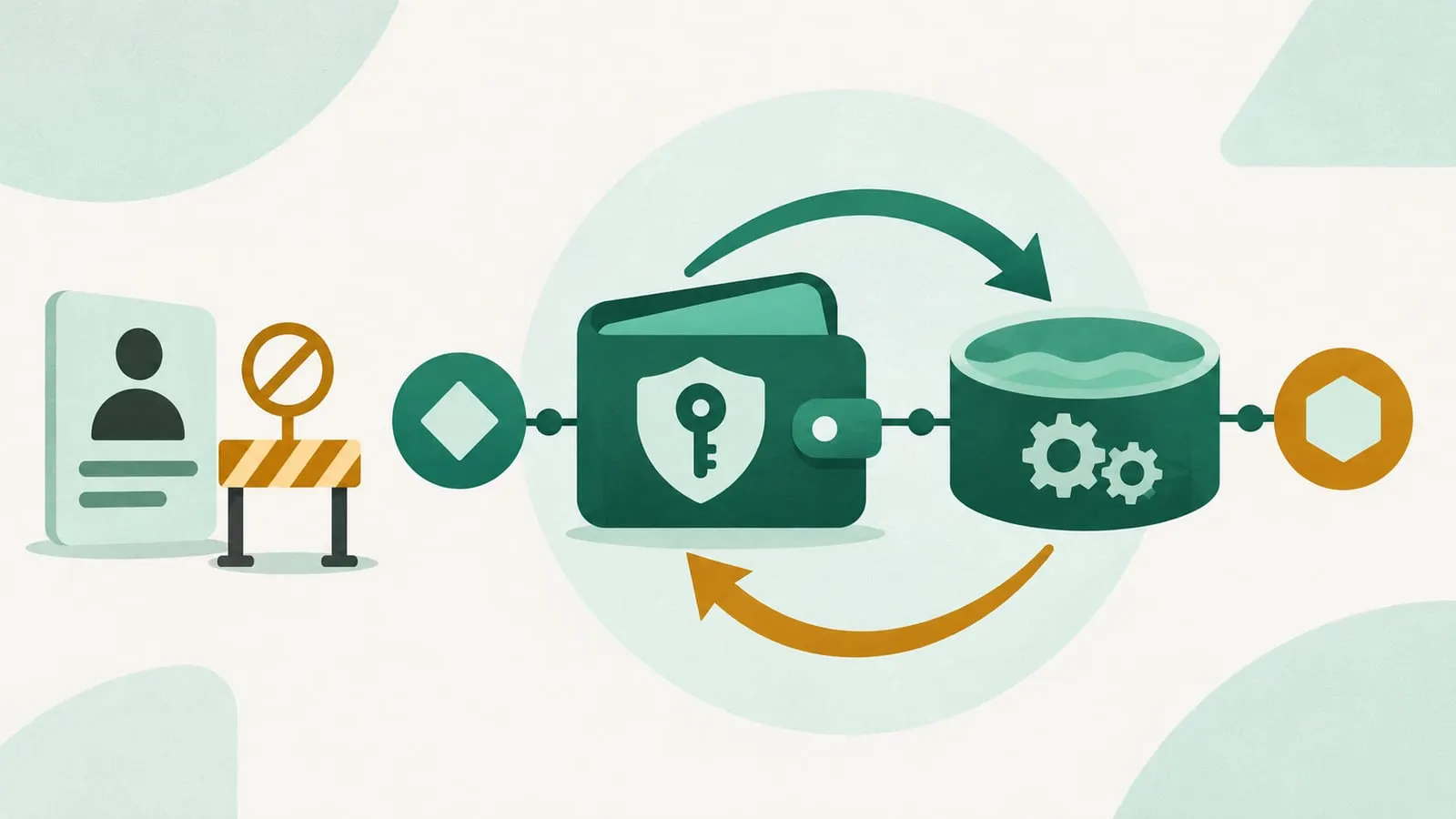
You can’t set up KYC on PancakeSwap or most other decentralized exchanges, and you don’t need to. A DEX is a set of smart contracts, not a company that holds accounts. You use it by connecting a self-custody wallet such as MetaMask or Trust Wallet, and that wallet is effectively your account. There is no registration, no identity check and therefore no “KYC ID” to find.
If you’re being asked for a KYC ID, passport scan or seed phrase by something that calls itself PancakeSwap, stop: you are probably on a phishing site or talking to a scammer.
Why DEXs don’t do KYC
KYC (know your customer) is an identity check that regulated financial firms run on their customers before opening an account. It exists because a firm holds your money and must screen who it serves.
On a DEX there is no account and no custody:
- You keep your own funds. Tokens stay in your wallet until the moment you sign a swap; the smart contract trades them against a liquidity pool and sends the result straight back.
- Your identity is a wallet address. The contract only sees the address that signed the transaction.
- Nobody can verify you. There’s no customer database, so there’s nothing to upload documents into.
That’s why both of the original community replies to this question were right that PancakeSwap needs no KYC. Our guide on how to access a decentralized exchange walks through the actual setup: wallet, gas token, connect, approve and swap.
Where you will meet KYC
KYC shows up around DEXs, not inside a normal swap:
| Situation | KYC? | Why |
|---|---|---|
| Swapping tokens on PancakeSwap, Uniswap and similar DEXs | No | No account or custody |
| Buying crypto with a card or bank transfer (including “Buy” buttons inside wallets) | Usually yes | The fiat on-ramp provider is a regulated payments or exchange business |
| Centralized exchanges such as Binance or Coinbase | Yes | Custodial, regulated platforms |
| Some token launchpads, private sales and tokenized-stock products | Sometimes | The issuer or product may restrict who can buy |
| Permissioned pools for institutions | Sometimes | Access limited to verified wallets |
So if you remember “verifying” while getting started, it was almost certainly the exchange or on-ramp you used to buy your first BNB or ETH, not the DEX. See DEX vs CEX privacy and regulation for a fuller comparison.
No KYC doesn’t mean no rules
DEX websites are still run by teams that respond to regulation:
- Address screening. Uniswap Labs says its app blocks addresses on the US OFAC sanctions list and, with help from TRM Labs, addresses associated with illicit activity such as stolen funds or ransomware. That’s screening, not KYC: no documents are collected. Uniswap Labs also notes that it doesn’t control access to the protocol through any portal other than its own app.
- Geo-blocking. Some front ends restrict specific countries or features, such as tokenized stocks.
- Regulators’ view. Regulators differ on whether the teams behind DeFi apps should run AML checks. In the EU, a recital (an explanatory preamble paragraph, not an operative article) of the MiCA regulation says crypto-asset services provided in a fully decentralised manner without any intermediary should not fall within its scope, while services that are only partly decentralised can still be covered; where that line sits is still debated. In the US, Congress used the Congressional Review Act to overturn the IRS rule that would have required many DeFi front-end operators to report users’ trades as brokers, and President Trump signed the resolution (Public Law 119-5) on 10 April 2025.
Rules keep evolving; see whether governments can ban DEXs.
KYC won’t make you safer, but these steps will
The question mentioned setting up KYC “for extra security”. On a DEX, identity checks add no protection. What protects you:
- Guard the seed phrase. Write it down offline. No DEX, wallet or support agent will ever ask for it. Read how safe a DeFi wallet is.
- Use a hardware wallet for larger amounts. A cold wallet keeps keys off your computer and still connects to DEXs to sign. (Exodus, mentioned in an old reply here, is a software wallet, not cold storage.)
- Bookmark the real site. Type pancakeswap.finance yourself; search ads and social-media links often lead to look-alikes.
- Review and revoke approvals. Malicious sites ask for unlimited token approvals; revoke the ones you don’t use.
- Verify token contracts before buying anything outside the default list.
More in how to secure your use of decentralized exchanges.
Red flags: “KYC” requests that are scams
- A pop-up or DM saying your DEX account must be “verified” or “validated” to unlock funds.
- A form asking for your seed phrase, private key or a “wallet sync” code.
- A “support” account on Telegram, X or Discord that contacted you first.
- A fee demanded to “complete KYC” before you can withdraw.
All of these are standard crypto scams. If you’ve already entered a seed phrase, move remaining funds to a fresh wallet immediately.
Privacy and taxes
No KYC doesn’t mean anonymity. Every swap is recorded on a public blockchain, and once your address is linked to an exchange account that did KYC, your history can be traced. See is DeFi completely anonymous?. Tax rules in most countries apply to DEX trades just as they do to CEX trades, so keep records. For more on DEXs, browse the DEXs and AMMs guide.
Frequently asked questions
Does PancakeSwap require KYC?
No. PancakeSwap is a set of smart contracts on BNB Chain and other networks that you use by connecting a self-custody wallet. There is no sign-up, account or identity check for swapping or providing liquidity, though some features, such as tokenized stocks, are geo-blocked in certain countries.
Why can't I find my KYC ID on a DEX?
Because it doesn't exist. A DEX never collects your identity, so there's no KYC ID. Your wallet address is the only identifier, and your seed phrase is the only 'password'.
Can a DEX freeze my account?
There is no account to freeze, and the core smart contracts generally can't block a wallet. A company running a website front end can, however, refuse to serve certain wallet addresses or countries, as Uniswap Labs does for sanctioned addresses.
Are there DEXs that do require KYC?
A few products add identity checks, such as permissioned pools for institutions, some token launchpads and tokenized-stock features. Ordinary token swaps on major DEXs don't require KYC.
Do I still pay taxes if I use a DEX without KYC?
Yes, in most countries. Tax obligations depend on your residence, not on whether the platform collected your ID, and on-chain trades are public and traceable.
Sources
- PancakeSwap documentation: FAQ
- Uniswap Help Center: Address Screening Guide
- Uniswap Labs blog: TRM Labs address screening
- Regulation (EU) 2023/1114 on markets in crypto-assets (MiCA), recital 22
- House Ways and Means Committee: President Trump signs resolution overturning IRS DeFi broker rule (10 April 2025)
- Public Law 119-5 (H.J.Res. 25)
Educational content, not financial advice. DeFi carries risk, including total loss of funds.