Will I Earn a High Interest Rate on Stablecoins? What Rates Really Look Like in 2026
On this page
I want to earn a high interest rate on whatever I choose to invest in. Will I earn a high interest rate on stable coins?
The short answer
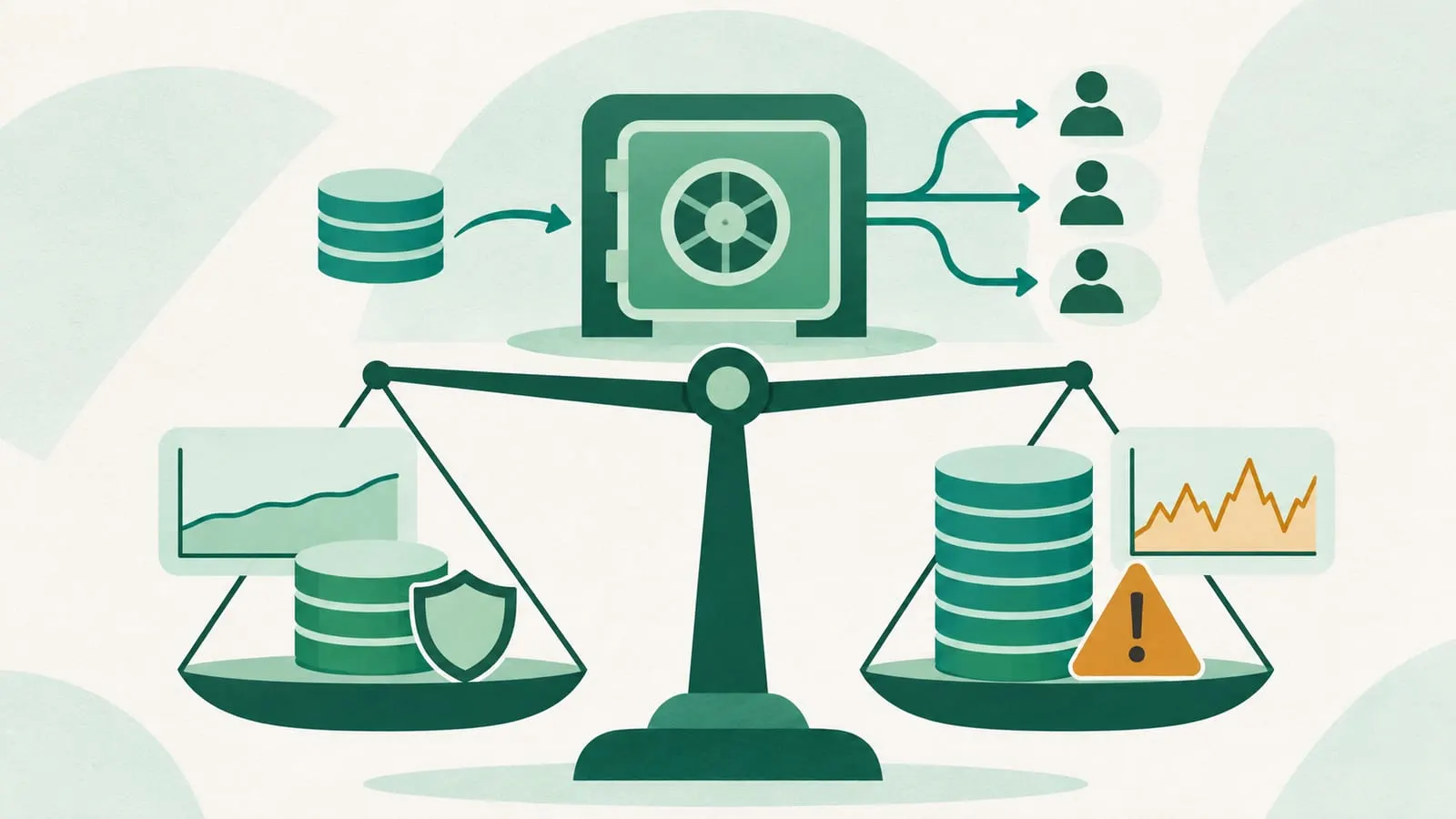
Probably not, if by “high” you mean much more than a savings account at a good bank or a Treasury bill. As of mid-November 2026, the largest DeFi stablecoin markets paid roughly 3–4.5% base APY on DefiLlama, about the same as 3-month US Treasury bills (around 4.2%). That is well above the average US bank savings rate, but it is not a high return, and it comes with risks a bank deposit doesn’t have.
You can find stablecoin yields of 10% or more. Those are not a better deal on the same thing; they are payment for taking more risk, whether that risk is visible or not. In 2022 several companies that paid high rates on stablecoins froze customer withdrawals and went bankrupt. This page explains what rates are realistic, why, and what happened in 2022. It is not financial advice.
What stablecoins actually pay (November 2026)
| Option | Approximate rate, mid-November 2026 | Deposit protection |
|---|---|---|
| US bank savings, national average (FDIC) | 0.38% | FDIC insured up to limits |
| 3-month US Treasury bill | About 4.2% | Backed by the US government |
| Aave V3 USDC (Ethereum), base | About 4.5% | None |
| Compound III USDC (Ethereum) | About 3.6% | None |
| Sky Savings Rate (sUSDS) | About 3.8% | None |
| Aave V3 USDT (Ethereum), base | About 3.1% | None |
| DAI Savings Rate (sDAI) | About 1.25% | None |
DeFi rates from DefiLlama, Treasury yield from the US Treasury, bank rate from the FDIC. All rates float.
Some markets add a percentage point or two in token rewards on top of these base rates. Smaller and newer protocols often advertise far more. For a fuller comparison, see crypto savings accounts; for DAI specifically, how much interest you can earn with DAI.
Why stablecoin rates aren’t usually high
A stablecoin is a digital dollar, so the interest on it behaves like interest on dollars. It comes from three places:
- Borrowers. Traders and institutions borrow stablecoins, usually against crypto collateral, and pay interest. They pay more when markets are hot and leverage is in demand, and less when markets are quiet. What determines interest rates on crypto lending platforms explains the model.
- Reserve income. Some products pass on interest from Treasury bills held in reserves, which caps them near Treasury rates.
- Trading fees and incentives. Liquidity pools earn small fees; higher numbers usually come from reward tokens that can fall in value or be switched off.
Because of this, stablecoin rates on large, established platforms tend to sit near short-term interest rates, rising in bull markets and falling in bear markets. A rate of 15% on a dollar token means someone is paying 15% to borrow dollars, the platform is subsidizing it, or your money is being used in a riskier way than you think.
Plain stablecoins pay nothing by themselves. Under the US GENIUS Act, signed in July 2025, regulated payment stablecoin issuers may not pay holders interest or yield just for holding the coin. Whether exchanges and other third parties can pay rewards has been debated in Congress, so the products on offer may change.
What happened in 2022: when high stablecoin rates failed
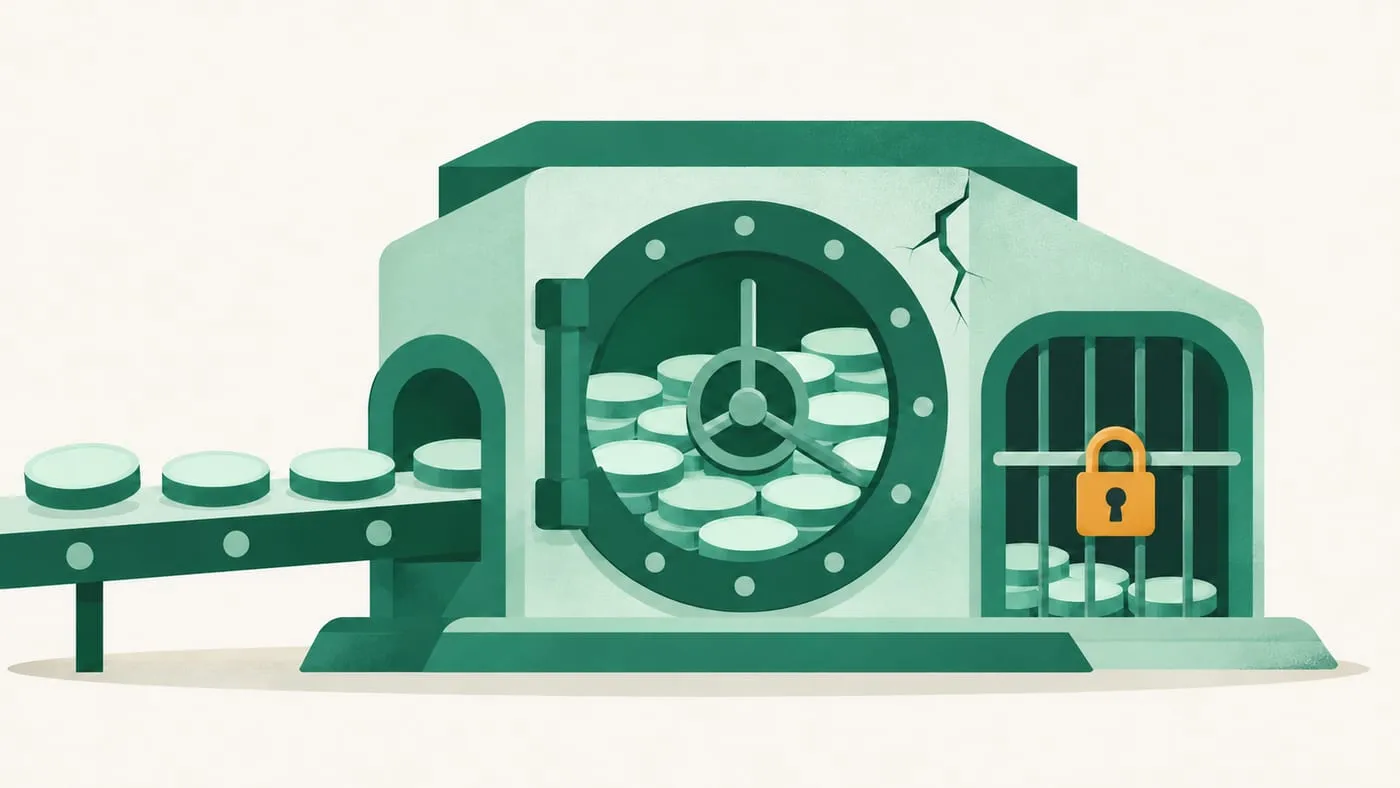
Several crypto lenders attracted billions of dollars by paying high rates on stablecoins and other crypto. Customers saw these as savings accounts; legally, they were lending to the company.
| Platform | What it offered | What happened |
|---|---|---|
| Anchor Protocol (Terra) | Close to 20% on UST deposits | UST, an algorithmic stablecoin, collapsed in May 2022 and Anchor’s deposits lost almost all their value |
| Celsius | High rates on crypto and stablecoins | Paused withdrawals in June 2022; filed for Chapter 11 bankruptcy on July 13, 2022 |
| Voyager Digital | Interest on crypto and stablecoin balances | Suspended withdrawals in July 2022 after a large loan to Three Arrows Capital went bad; filed for bankruptcy days later |
| BlockFi | Interest accounts on crypto and stablecoins | Paused withdrawals in November 2022 after FTX collapsed; filed for Chapter 11 on November 28, 2022 |
| Genesis / Gemini Earn | Gemini’s Earn program lent customer assets to Genesis | Genesis halted withdrawals in November 2022 and filed for bankruptcy in January 2023, freezing Earn customers’ assets |
How customers fared varied a great deal, and every outcome took a long time:
- Celsius and Voyager customers recovered only part of what they had deposited, through court-supervised bankruptcy plans that took well over a year.
- BlockFi customers were eventually repaid 100% of allowed claims, valued in US dollars at crypto prices on the November 28, 2022 filing date (not at later prices), largely because BlockFi recovered money from its claims against FTX. See BlockFi vs Compound.
- Gemini Earn customers received 100% of their assets back in kind by June 2024, after a settlement involving New York regulators, about a year and a half after their funds were frozen.
- Anchor depositors had no bankruptcy process to fall back on; their UST simply lost its value. See why algorithmic stablecoins are so risky.
Lessons from 2022
- The yield was a loan to the company. Your return depended on the lender’s investments and solvency, not on the stablecoin.
- High rates were often funded by risky lending. Large loans to a few trading firms, such as Three Arrows Capital and FTX’s affiliate Alameda Research, sank several lenders.
- Withdrawals can stop overnight. Terms of service allowed pauses, and customers became unsecured creditors.
- “Reputable” was not enough. These were large, well-known, heavily advertised companies.
Many earlier answers to this question named specific platforms and promised 5–15% on “reputable” stablecoins. Several of the platforms that offered such rates are no longer operating, which is why those answers have been removed.
How to judge a stablecoin rate
Rather than chasing the highest number, ask:
- Who pays it? Borrowers, reserve income, trading fees or token rewards? If you can’t tell, treat that as a red flag.
- How does it compare with Treasury bills? The gap above that benchmark is roughly what you are being paid for extra risk.
- Who holds my coins? With a company (CeFi), you rely on its solvency. In DeFi, you rely on smart contracts and collateral. The risks of depositing in DeFi vs BlockFi contrasts the two.
- Is it base yield or rewards? Token rewards can shrink fast. Check the base APY separately; see what APY means in crypto.
- Which stablecoin is it? The yield is only as good as the coin. See which stablecoin is safest.
- Can I get out? Lock-ups, cooldowns and withdrawal queues matter in a crisis.
Risks and red flags
- Platform failure. Centralized lenders can freeze withdrawals and go bankrupt, as in 2022.
- Smart contract risk. DeFi pools can be hacked or left with bad debt. See the major lending risks in DeFi.
- Depegs. A stablecoin can fall below $1; USDC briefly traded around $0.87–$0.88 in March 2023 and UST went to near zero in 2022.
- No deposit insurance. Regulators such as the DC Department of Insurance, Securities and Banking warn that crypto interest accounts are not insured like bank deposits.
- Rate cuts. Variable rates can halve in weeks.
- Taxes. Interest is generally taxable income.
Red flags for scams: fixed “guaranteed” double-digit returns, rewards for recruiting others, pressure to deposit quickly, anonymous teams and withdrawal fees demanded before you can access your money.
Bottom line
You can earn interest on stablecoins, and in late 2026 the mainstream rates were in the low-to-mid single digits, roughly in line with Treasury bills. Anything well above that is compensation for risk, and the 2022 failures show how quickly a high rate can turn into frozen funds. For more ways stablecoins generate returns and how issuers make money, see can you make money from stablecoins? and the stablecoins hub.
Frequently asked questions
What is a normal interest rate on stablecoins?
As of mid-November 2026, DefiLlama showed Aave V3 USDC on Ethereum at about 4.5% base APY, USDT about 3.1%, Compound III USDC about 3.6% and the Sky Savings Rate (sUSDS) about 3.8%. Rates change daily.
Why can't stablecoins pay 10% safely?
Because the money has to come from somewhere. Borrowers rarely pay double-digit rates on dollars for long unless markets are frothy, so sustained high yields usually rely on token rewards, leverage, riskier lending or new deposits.
Did people lose money on stablecoin interest accounts in 2022?
Yes. Celsius, Voyager, BlockFi and Genesis froze withdrawals and filed for bankruptcy. Customers waited a year or more; Celsius and Voyager customers recovered only part of their deposits, while BlockFi and Gemini Earn customers were eventually repaid in full on their allowed claims (BlockFi's measured in US dollars at November 2022 prices).
Are stablecoin interest accounts insured?
No. They are not bank deposits and are not covered by FDIC insurance. If a platform fails, you are typically an unsecured creditor.
Do stablecoins pay interest by themselves?
No. Plain USDC, USDT or DAI in a wallet earns nothing. Under the US GENIUS Act, regulated payment stablecoin issuers may not pay holders interest just for holding the coin, so yield comes from lending, savings tokens or platform rewards.
Sources
- BlockFi: BlockFi estate will return 100% of eligible claims (July 2024)
- DefiLlama: Yields (live stablecoin rates)
- US Treasury: Daily Treasury bill rates
- The Block: Crypto bankruptcy filings, from 3AC to BlockFi (Nov 2022)
- CNBC: How the fall of Celsius dragged down crypto investors (2022)
- Gemini: Announcing the successful resolution of Earn (final distribution, June 20, 2024)
- Congressional Research Service: The Stablecoin Yield Debate (IF13174)
- DC Department of Insurance, Securities and Banking: Cryptocurrency interest-bearing accounts
Educational content, not financial advice. DeFi carries risk, including total loss of funds.