What Are the Most Popular Tokenization Platforms in 2026?
On this page
I am very keen to learn more about tokenization in the context of decentralized finance. What are the most popular tokenization platforms for me to check out?
Short answer
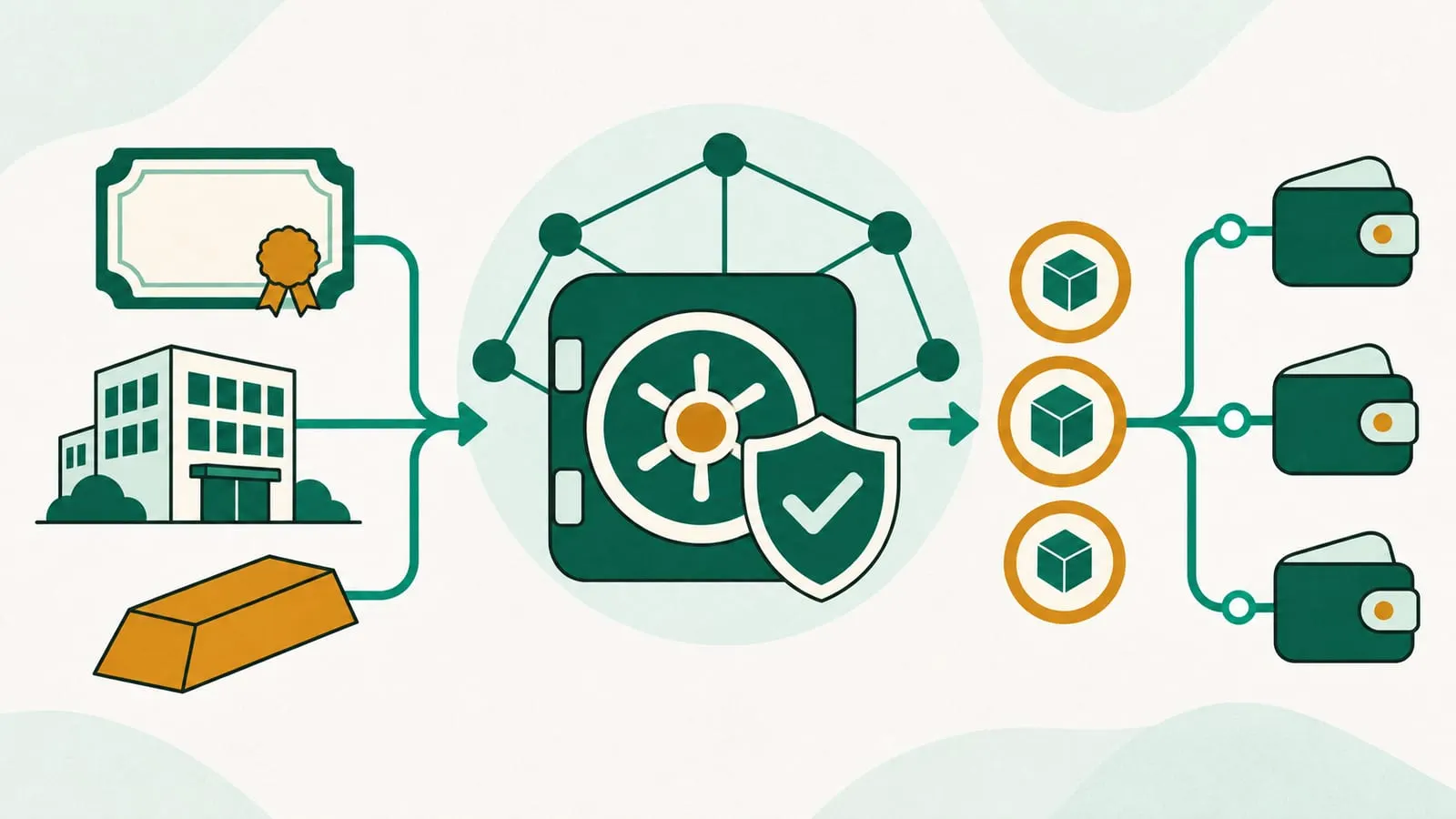
The most popular tokenization platforms in 2026 are the ones turning real-world assets (RWAs) such as Treasury bills, money market funds, private credit, gold and stocks into blockchain tokens. Measured by the value of tokens distributed on public chains, rwa.xyz ranked Ondo, Securitize, Franklin Templeton Benji Investments and Spiko as the four largest on 16 November 2026, each holding between roughly $3.2 billion and $4.1 billion. Older names from the 2022 era, such as Polymath, tZERO, Tokeny and ADDX, still operate but mostly as infrastructure or niche venues.
“Popular” also depends on what you need: an issuer wanting software, an investor wanting a tokenized fund, or a DeFi user wanting on-chain collateral. If you’re new to the idea, start with what it means to tokenize an asset.
The RWA tokenization market in numbers (November 2026)
rwa.xyz, the most widely cited RWA data source, splits the market in two:
- Distributed assets: tokens issued on blockchains that can move between wallets, used “as a distribution layer”. Total value was about $39.5 billion across roughly 5.75 million holders.
- Represented assets: holdings that use a blockchain only “as a recordkeeping layer”, where tokens generally don’t circulate freely. These totaled about $422 billion, dominated by a few large institutional ledgers.
Stablecoins (about $278 billion) are tracked separately. By asset class, tokenized US Treasury products were the largest distributed category at about $13.9 billion, led by Ondo’s USDY (about $2.4B), Circle’s USYC (about $2.0B), Franklin Templeton’s iBENJI and BENJI, and BlackRock’s BUIDL fund issued through Securitize (about $1.7B). Gold tokens (Tether’s XAUT and Paxos’s PAXG), private credit, tokenized stocks and private equity make up much of the rest.
These figures move daily. Check rwa.xyz for live values; DefiLlama’s TVL dashboards do not count most of these tokenized funds as DeFi TVL.
Largest tokenization platforms by distributed value
| Rank | Platform | Distributed value (16 Nov 2026) | Known for |
|---|---|---|---|
| 1 | Ondo | ~$4.13B | USDY yield token, OUSG fund, tokenized US stocks for non-US users |
| 2 | Securitize | ~$3.71B | Issuance platform for BlackRock’s BUIDL and other institutional funds |
| 3 | Franklin Templeton Benji Investments | ~$3.28B | BENJI tokenized money market fund shares |
| 4 | Spiko | ~$3.22B | Tokenized euro and dollar funds (e.g. EUTBL, eurSAFO) |
| 5 | Tether Holdings | ~$2.96B | XAUT gold token |
| 6 | Circle | ~$2.02B | USYC tokenized money market fund |
| 7 | Paxos | ~$1.71B | PAXG gold token |
| 8 | bStocks | ~$1.36B | Tokenized stocks |
| 9 | STOKR | ~$1.34B | Tokenized securities issuance |
| 10 | Maple Finance | ~$1.23B | On-chain private credit |
Other notable names in the top 20 include Kinexys Digital Assets (JPMorgan’s blockchain unit), WisdomTree, xStocks, Centrifuge and Superstate. Source: rwa.xyz platform league table, distributed model, excluding stablecoins.
By represented value, the leaders look completely different: Broadridge’s Distributed Ledger Repo platform (about $374B), Figure (about $26.7B) and Bridgetower (about $10.7B). These matter for institutional finance but aren’t platforms retail users interact with.
Types of tokenization platforms
1. Asset issuers with their own products. Ondo, Franklin Templeton, Circle, Spiko, Tether and Paxos create and manage the underlying fund or asset and issue the token. Investors buy the product, not the software.
2. Issuance and compliance infrastructure. These sell white-label tokenization to banks, funds and companies:
- Securitize: end-to-end issuance and investor onboarding for asset managers, including BUIDL.
- Tokeny: issuance software built around the ERC-3643 permissioned token standard, now part of Apex Group.
- Polymath: once a security-token pioneer (creator of the ST-20 standard and the Polymesh blockchain), now offering a white-label “Polymath Capital Platform”. Nasdaq-listed TruGolf completed its acquisition of Polymath Research on 8 October 2026.
- Superstate: a registered transfer agent and investment adviser offering tokenized funds and on-chain share registers for public companies.
3. Regulated trading venues. tZERO says it runs SEC- and FINRA-regulated entities, including a broker-dealer, transfer agent and alternative trading system for digital securities. ADDX is a Singapore private-markets platform for accredited investors that says it holds a MAS Capital Markets Services licence and is a Recognised Market Operator. Venues like these matter because tokenized securities are only useful if they can be traded legally.
4. DeFi-native credit and real-estate protocols. Maple Finance and Centrifuge bring loans and credit pools on-chain, and smaller platforms tokenize rental property. See what assets can be tokenized for the full range.
How to compare tokenization platforms
Whether you are an issuer choosing a vendor or an investor choosing a product, check:
- Legal structure. Is the token a share in a regulated fund, a debt note from a special-purpose vehicle, or just a claim on a company? Who holds the underlying assets, and what happens in bankruptcy?
- Regulatory status and eligibility. Is the platform a registered transfer agent, broker-dealer or licensed exchange? Many products are limited to accredited or non-US investors; Ondo, for instance, offers USDY under Regulation S and its tokenized stocks only to eligible non-US persons. Expect KYC verification.
- Token standard and transfer rules. Permissioned standards like ERC-3643 restrict transfers to whitelisted wallets, which affects DeFi use.
- Chains supported. In rwa.xyz’s network league table, Ethereum led with about $15.1B, followed by BNB Chain, Solana and Stellar (November 2026).
- Redemption and liquidity. Can you redeem directly for cash, how often, and at what fees? Secondary markets for many tokens are thin.
- Transparency. Look for published audits, daily NAV, and attestation of reserves.
Risks
- Counterparty and legal risk. You rely on the issuer, custodian and legal wrapper. The token is only as good as the claim behind it.
- Smart contract risk. Bugs, admin keys and upgradeable contracts can freeze or misdirect assets; see smart contracts.
- Liquidity risk. Redemptions can be gated or limited to business hours even if the token trades 24/7.
- Regulatory change. In the US, SEC staff issued a Statement on Tokenized Securities on 28 January 2026, and the SEC’s March 2026 interpretation treats tokenized securities (“digital securities”) as securities, and rules are still evolving there and elsewhere. A tokenized share is still a security wherever securities laws apply.
- Yield is not a deposit. Tokenized Treasury funds pay yield from underlying assets, but they are not bank accounts with deposit protection. Compare with how tokenized money markets work, our stablecoin guides and which stablecoin is safest.
Bottom line
Tokenization has moved from small security-token experiments to multi-billion-dollar products run by asset managers and fintechs. The leaders by on-chain distributed value are Ondo, Securitize, Franklin Templeton and Spiko, while issuance specialists such as Tokeny and Polymath and regulated venues such as tZERO serve the institutions behind them. For more context, see whether decentralized stock exchanges are legal, our token topic hub and the Tokens and NFTs section.
Frequently asked questions
What is the biggest tokenization platform?
It depends on the measure. By distributed on-chain value, Ondo and Securitize led in November 2026 per rwa.xyz. By represented value, where the chain is only a ledger, Broadridge's Distributed Ledger Repo platform was far larger.
What is the difference between a tokenization platform and a stablecoin?
A fiat-backed stablecoin is a tokenized claim on cash-like reserves designed to hold $1. Tokenization platforms usually issue securities such as fund shares, bonds or stock-linked tokens whose value moves with the underlying asset. rwa.xyz tracks stablecoins separately.
Can retail investors use tokenization platforms?
Sometimes. Many tokenized funds are limited to accredited, qualified or institutional investors, and some products, such as Ondo's tokenized stocks and USDY, are offered only outside the United States. Each platform runs KYC and eligibility checks.
Which blockchains are used most for tokenized assets?
In November 2026 rwa.xyz's network league table showed Ethereum with the most RWA value (about $15.1B), followed by BNB Chain (about $6.2B), Solana (about $5.1B) and Stellar (about $4.7B).
Are Polymath and tZERO still operating?
Yes. Polymath, the company behind the Polymesh blockchain, now offers a white-label tokenization platform and was acquired by Nasdaq-listed TruGolf in October 2026. tZERO describes itself as operating an SEC-registered broker-dealer, transfer agent and ATS for tokenized securities.
Sources
- rwa.xyz: Tokenization platforms (distributed and represented)
- rwa.xyz: Tokenized US Treasuries
- rwa.xyz: RWA market overview
- Ondo Finance: USDY (Regulation S offering)
- tZERO: tokenized securities infrastructure
- Tokeny: ERC-3643 tokenization platform
- Superstate (registered transfer agent and investment adviser)
- SEC staff: Statement on Tokenized Securities (28 January 2026)
- Polymath: Polymath Capital Platform and Polymesh
Educational content, not financial advice. DeFi carries risk, including total loss of funds.