Decentraland Review (2026): Ease of Use, Fees, Profitability and Risks
On this page
Verdict
Decentraland is still alive in late 2026, and it is easier to get into than ever: a free desktop app, new iOS and Android apps, and sign-in with Google or Discord instead of a crypto wallet. It is a reasonable place to attend virtual events, build scenes or sell digital fashion.
It is a poor bet as a get-rich-quick investment. Its MANA token traded around $0.06 in mid-November 2026, roughly 99% below its November 2021 high, and the virtual-land boom that made Decentraland famous has not returned. Treat it as a social and creative platform first.
| What it is | A user-owned 3D virtual world (metaverse) on Ethereum, launched publicly in 2020 |
| Cost to join | Free |
| Platforms | Windows and Mac desktop app; iOS and Android apps |
| Token | MANA (ERC-20, also bridged to Polygon) |
| Main fees | 2.5% fee to the DAO on primary Wearable and Emote sales; network gas on Ethereum transactions |
| Governance | Decentraland DAO (MANA, LAND, Estate, NAME and L1 Wearable holders) |
Pros
- Free to enter, with social logins and no crypto required
- Now on mobile as well as desktop
- Creators keep 97.5% of Marketplace sales
- Transparent, on-chain governance with a published treasury
- Many Polygon Wearable trades have their gas covered by the DAO
Cons
- Activity is modest compared with mainstream games and social apps
- Desktop app needs a fairly powerful PC or an Apple silicon Mac
- MANA and LAND prices have fallen sharply since 2021
- Earning meaningful income is rare
- Mobile apps are not available in the UK, per Decentraland’s docs
How Decentraland works in 2026
Decentraland is a persistent virtual world split into a fixed map of LAND parcels (the “Genesis City”). Each parcel is an NFT on Ethereum, and adjacent parcels can be grouped into Estates. Owners, or people they authorise, deploy 3D “scenes” such as galleries, games, clubs and venues. Users also own Wearables, Emotes and unique NAMEs as NFTs, and Worlds offer standalone personal spaces outside the main map. For a primer on the concept, see what the metaverse is and NFTs in the metaverse.
What has changed since the 2021 hype:
- New clients. The old browser version has been replaced by a downloadable desktop app (Windows and macOS), which also launched on the Epic Games Store on 31 March 2026. The Android app went live the same day, and the iOS app followed in April 2026 (Apple’s App Store listing gives a release date of 7 April 2026, and Decentraland’s newsletter announced “iOS Now Live!” on 27 April); both share your account, avatar and inventory. Decentraland’s homepage claimed more than 400,000 total downloads in November 2026.
- Positioning. Decentraland now markets itself as a place to “hang out”: weekly screenings, live music, game nights and community meetups, rather than a land-speculation game.
- Creator incentives. Users can earn Marketplace Credits (1 credit = 1 MANA in value, spendable on Wearables and Emotes, in seasons with expiry dates) for weekly in-world goals. Creator Success, per Decentraland’s docs, funds independent game developers in stages: $1,000 for a “vertical slice” (V0), then $3,100 for a first complete playable version (V1), with further stages such as V2 ($2,800) considered for games that show strong player retention; progression is not automatic, applicants must be over 18, and the first round of V0 applications is open until 30 November 2026. A separate Creator Fund pays USDC rewards to enrolled published scenes based on player engagement, with a USD 30,000 beta season pool for 15 November to 31 December 2026. Terms can change, so check the docs before applying.
- Governance restructuring. Since a November 2024 vote, the DAO elects a five-member Council, which oversees an executive arm called DCL Regenesis Labs (approved by DAO vote on 10 March 2025). The non-profit Decentraland Foundation maintains the desktop client, Marketplace and infrastructure.
Ease of use
Getting started is simple. Download the app, sign in with Google, Discord or another social account (a wallet is created for you behind the scenes), or connect MetaMask or another crypto wallet, and you’re in. You don’t need MANA to explore.
The catch is hardware. The desktop app wants a reasonably modern PC with a dedicated graphics card or an Apple silicon Mac, with 16 GB of RAM a sensible baseline, and the mobile apps need a fairly recent mid-range phone or better. Check Decentraland’s current system requirements before downloading, as they change with client updates. Some older scenes are not yet optimised for touch controls.
In-world, finding things to do relies on the events calendar and “Places” lists. Outside scheduled events, many parcels are quiet, which is the most common complaint in user reviews.
Decentraland fees
| Action | Cost |
|---|---|
| Exploring, events, free avatar | Free |
| Primary sale of a Wearable or Emote | 2.5% fee to the DAO; creator keeps 97.5% |
| Secondary resale in the Marketplace | Royalties go to the item’s creator (beneficiary); Decentraland’s docs do not state the rate on the pages we checked |
| Buying/selling most Wearables and Emotes (Polygon) | Gas sponsored by the DAO if the item costs at least 1 MANA and you’re under the daily free-transaction limit |
| LAND, Estate and NAME transactions (Ethereum) | You pay Ethereum gas fees |
| LAND rentals | Owner sets a price per day in MANA; listing, editing and claiming back cost Ethereum gas |
| Buying MANA with a card or bank transfer | Third-party provider fees; may require KYC |
The DAO can pause gas sponsorship when Polygon fees are high, and items under 1 MANA are excluded. Polygon’s network is explained in our Polygon overview. OpenSea also charges its own fee when Decentraland items trade there.
MANA, LAND and the DAO
MANA is used to buy items on the Marketplace and gives voting power in the DAO. In mid-November 2026, MANA traded around $0.06 with a market capitalisation of roughly $120 million, down roughly 70% over the previous year and about 99% from its all-time high of about $5.85 in November 2021, per CoinGecko data (ranked about 220th on 16 November 2026). Check live data on CoinMarketCap or CoinGecko before relying on these figures.
The Decentraland DAO is one of the older DAOs still operating. MANA, LAND, Estate, NAME and some Wearable holders vote on proposals, and the DAO owns the LAND and Estate contracts and the treasury. Its funding includes a 222 million MANA, 10-year vesting contract that began on 19 February 2020, plus the 2.5% fee on primary Marketplace sales. Upgrades to the LAND and Estate contracts require a Security Advisory Board vote. For how token voting works in general, read how DAOs work and our governance token guide, or compare with our Aragon review.
Can you make money in Decentraland?
Possible ways, from most to least realistic:
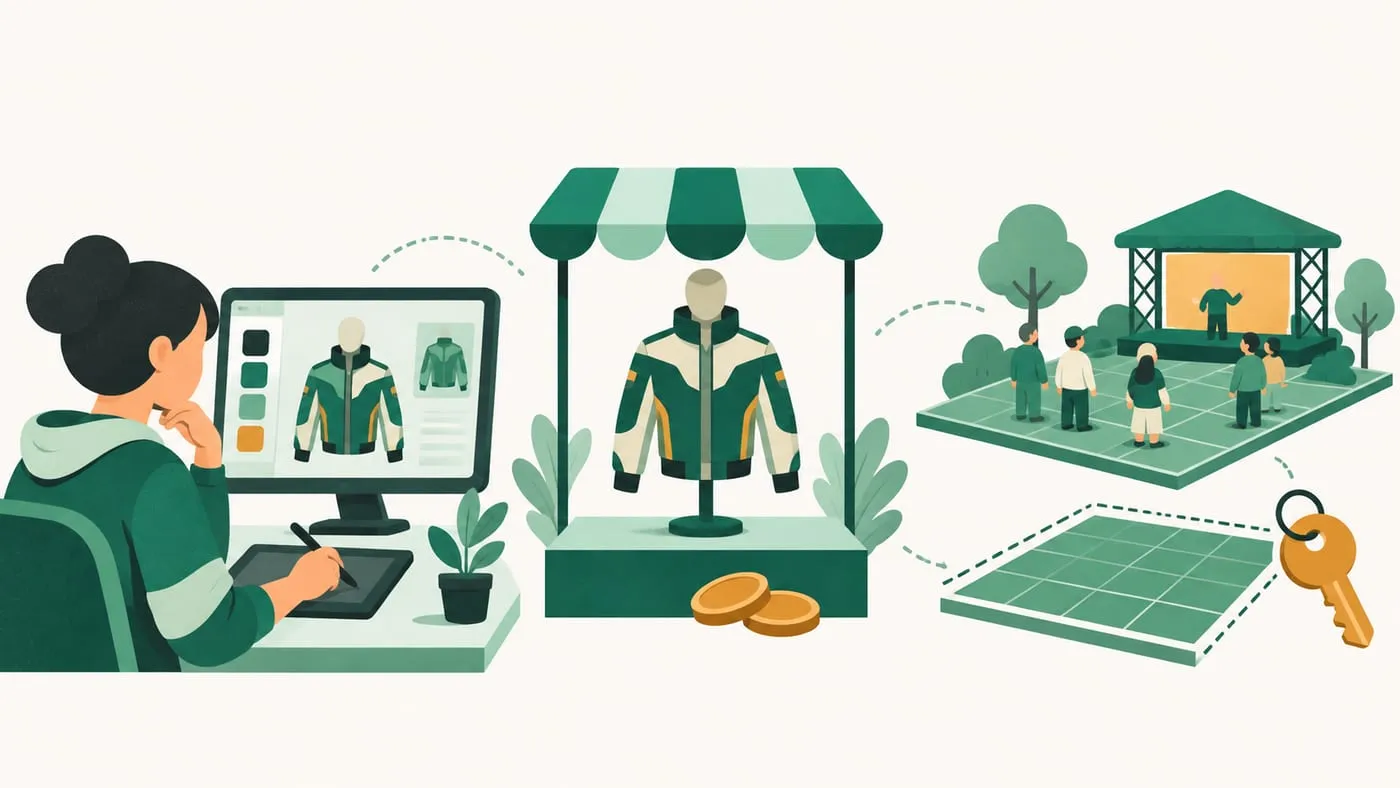
- Designing Wearables and Emotes. Creators keep 97.5% of sales, but items must pass curation and publishing has costs. Most collections sell little.
- Paid work. Some brands and communities pay builders, 3D artists, event hosts and DJs. Demand is limited and project-based. See metaverse game development services for what that work involves.
- Renting LAND. Owners can list parcels for rent in MANA through a built-in contract. Demand is thin outside central or event locations.
- Holding MANA or LAND for price gains. This is speculation. Prices peaked in late 2021 and have fallen heavily since, and there is no guarantee of a buyer at any price.
The original version of this review cited MANA rising “over 3,000%” since launch. That gain mostly reversed. Anyone buying today should assume they could lose most or all of what they put in.
Risks
- Price risk. MANA and LAND are volatile and illiquid. Thin LAND markets mean you may not be able to sell.
- Usage risk. The value of LAND depends on visitors. Daily activity has been far below the 2021 hype, and reliable independent user metrics are hard to find.
- Smart contract and wallet risk. Ownership lives on-chain; lost keys or a malicious approval can mean lost assets. Use a separate wallet for trading.
- Scams. Fake Decentraland sites, airdrops and “LAND presales” are common. Only use decentraland.org and its official Marketplace, and read our scam red flags.
- Regulatory limits. Availability varies; for example, Decentraland says its mobile apps are not offered in the UK because of crypto-gaming rules.
- Governance concentration. Voting power follows token holdings, so large holders carry more weight.
Bottom line
Decentraland in 2026 is a functioning, free virtual world with genuine improvements in access, especially the mobile apps and social logins. If you want to attend events, build or create digital fashion, it is worth trying. If you are looking for profit, the history of MANA and LAND since 2021 is a clear warning. For more on decentralized organisations and governance, browse our DAOs section.
Frequently asked questions
Is Decentraland still active in 2026?
Yes. The Decentraland Foundation and the DAO are still shipping updates, including Android and iOS apps and an Epic Games Store listing in 2026, regular community events, and Creator Success, a programme that funds game developers in stages, with its first round of applications open until 30 November 2026. Independent user-count data is patchy, so judge activity by visiting during a scheduled event.
Is Decentraland free to play?
Yes. You can explore, attend events and customize a free avatar without spending anything. You only pay if you buy Wearables, Emotes, NAMEs or LAND.
Can you make money in Decentraland?
Some people earn by selling Wearables and Emotes, renting out LAND or being paid for events and builds, but earnings are small and irregular for most users. Buying LAND or MANA in the hope of price rises has lost money for most buyers since 2021.
What are Decentraland's fees?
Primary sales of Wearables and Emotes carry a 2.5% fee that goes to the DAO, so the creator keeps 97.5%; when items are resold in the Marketplace, royalties go to the item's creator. Ethereum transactions such as LAND trades cost gas; many Polygon Wearable trades are gasless thanks to DAO sponsorship, subject to a daily limit and a 1 MANA minimum price.
Who controls Decentraland?
MANA, LAND, Estate, NAME and Ethereum-based (L1) Wearable holders vote in the Decentraland DAO, which owns the critical smart contracts and treasury. The DAO elects a five-member Council that oversees DCL Regenesis Labs, its executive arm, while the non-profit Decentraland Foundation maintains the desktop client and infrastructure.
Sources
- Decentraland docs: About Decentraland
- Decentraland docs: Decentraland on Mobile
- Decentraland docs: Mission, Vision and Roles (DAO, Council, Regenesis Labs, Foundation)
- Decentraland docs: Transactions in Polygon
- Decentraland docs: The DAO Fund
- Decentraland docs: Rentals
- Decentraland press release: Epic Games Store launch and Android app (31 March 2026)
- Decentraland docs: Publishing Collections (2.5% fee on primary sales; royalties on secondary sales)
- Decentraland docs: How to make money in Decentraland (Creator Fund, Creator Success)
- Decentraland docs: Creator Success, Get Paid To Make Games
- Apple App Store: Decentraland (iOS app, released 7 April 2026)
- Decentraland Weekly: iOS Now Live! (27 April 2026)
- CoinGecko: Decentraland (MANA) price and market data
- CoinMarketCap: Decentraland (MANA) price and market data
Educational content, not financial advice. DeFi carries risk, including total loss of funds.