Bull vs Bear Market: What's the Difference (and What It Means in Crypto)?
On this page
Hello hello. I'm really new to this world and was wondering what the difference is between bear and bull markets? What does this metaphor mean?
The short answer
A bull market is a sustained period of rising prices and optimism. A bear market is a sustained period of falling prices and pessimism. The SEC’s investor education site, Investor.gov, gives a common rule of thumb: a bull market is generally a rise of 20% or more in a broad market index over at least two months, and a bear market is a fall of 20% or more over at least two months.
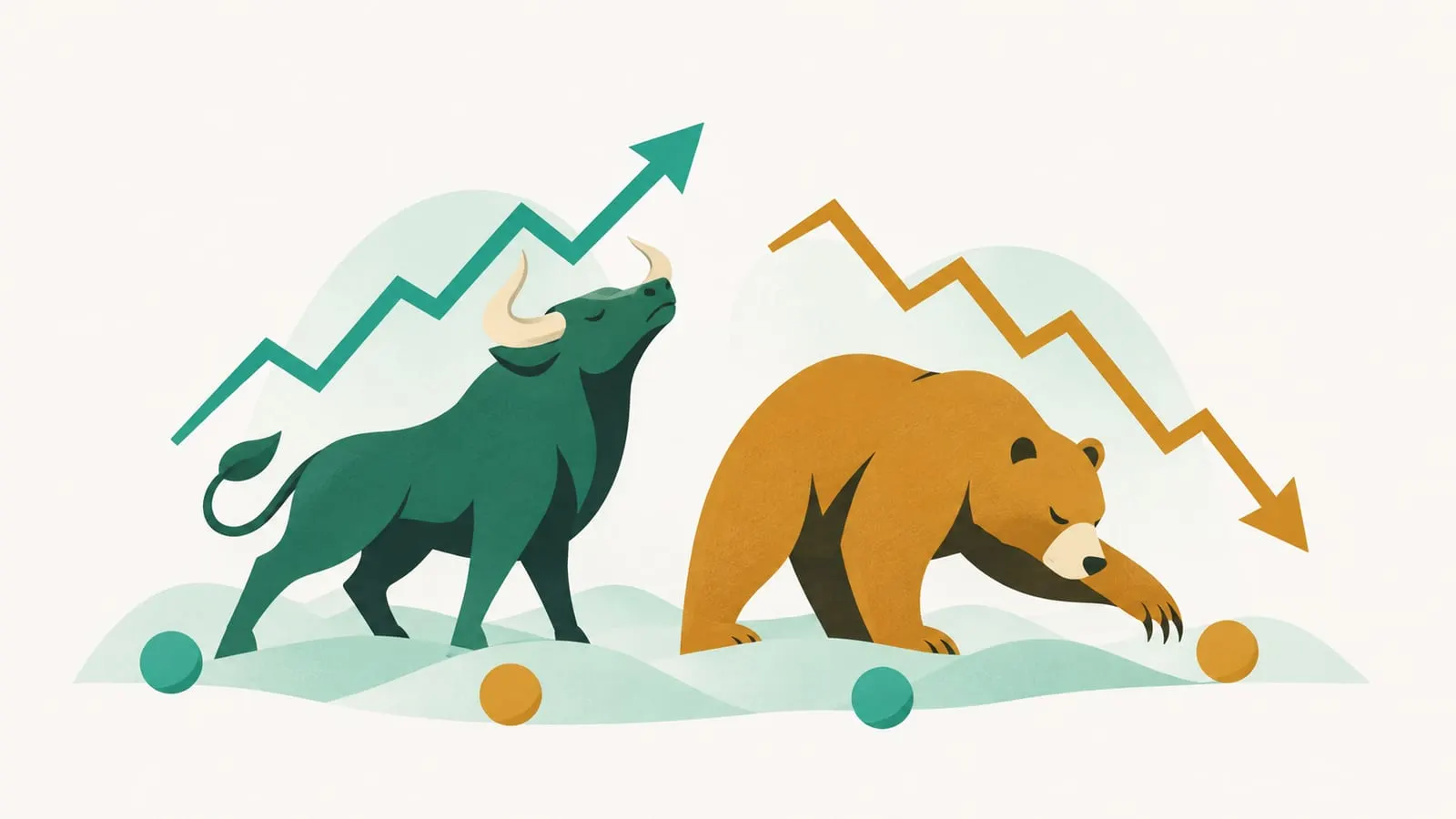
The names come from a popular image of how each animal attacks: a bull thrusts its horns up, a bear swipes its paws down. The exact historical origin of the terms is debated, but the mnemonic is the easiest way to remember which is which.
Bull vs bear market at a glance
| Bull market | Bear market | |
|---|---|---|
| Price direction | Rising over months | Falling over months |
| Rule of thumb | Up 20%+ from a recent low | Down 20%+ from a recent high |
| Sentiment | Optimism, fear of missing out | Pessimism, fear of further losses |
| Trading activity | Volumes and new users usually rise | Volumes and new users usually fall |
| In crypto | New tokens launch, yields and leverage rise, fees climb | Projects shut down, leverage unwinds, liquidations spike |
| Common mistake | Buying with borrowed money near the top | Selling in panic near the bottom |
How bull and bear markets look in crypto
The 20% rule was designed for stock indexes. Crypto is far more volatile, so 20% moves happen often, and crypto cycles are usually described by much larger swings. A few examples, using bitcoin prices from CoinGecko and DefiLlama:
- 2017–2018: bitcoin peaked near $20,000 in December 2017 and fell to about $3,200 by December 2018, a drop of more than 80%.
- 2021–2022: bitcoin peaked at about $69,000 on 10 November 2021 and fell below $16,000 a year later, a drop of roughly 75–77%. The collapse of TerraUSD in May 2022 and of crypto lenders and exchanges later that year deepened the decline.
- 2024–2025 bull market: bitcoin passed $73,000 in March 2024 and set an all-time high of about $126,080 on 6 October 2025, according to CoinGecko. Ether set its own high of about $4,946 on 24 August 2025.
- Since late 2025: in mid-November 2026, bitcoin traded around $64,500, roughly 49% below that high, and ether around $1,820, about 63% below its peak. By the 20% rule, that is a bear market.
These numbers describe the past. They do not tell you when a bear market will end or how high the next rally will go, and nobody can reliably time either.
For the current picture in more depth, see our Q&A on whether crypto is in a bear market, or browse the bear market and bull market hubs.
What bull and bear markets mean for DeFi users
Market cycles change how DeFi behaves, not just prices:
- Borrowing demand and yields. In bull markets more people borrow to take leveraged positions, which tends to push up lending rates and farming yields. In bear markets demand and yields usually fall. See what determines interest rates on crypto lending platforms.
- Liquidations. Sharp drops push over-leveraged loans below their collateral thresholds, triggering forced liquidations, which can add selling pressure.
- Stablecoin demand. In downturns many users move into stablecoins, which hold their dollar value but carry their own issuer and depeg risks.
- Project survival. Bear markets expose weak tokenomics and unsustainable yields. Many projects launched in a bull market do not survive the next bear market.
- Gas fees. Busy bull markets have historically driven network fees up; quieter markets bring them down.
Common strategies, and their risks
People respond to market cycles in different ways. None of these is a recommendation, and each can lose money:
- Holding through cycles accepts large drawdowns in exchange for not having to time the market.
- Dollar-cost averaging (buying a fixed amount at regular intervals) spreads purchases over time, which reduces the risk of buying everything at a peak but does not prevent losses if prices keep falling.
- Moving to stablecoins reduces price exposure but adds stablecoin-specific risk.
- Earning yield in a downturn through lending or staking can offset some losses, but rewards paid in a falling token may not.
- Shorting or hedging with derivatives can profit from falls, but leverage can wipe out a position quickly in either direction.
Our community thread on bear market strategies and the guide on how to work with crypto volatility in DeFi go further.
Risks to keep in mind
- Labels lag reality. A market is usually called a bull or bear market only after a big move has already happened.
- Bear market rallies. Prices often bounce sharply during a longer decline, tempting people back in before further falls.
- Leverage is most dangerous at turning points. Many of the largest losses in crypto came from leveraged positions caught by sudden reversals.
- Scams follow sentiment. Bull markets bring hype-driven token launches; bear markets bring fake “recovery” services and promises of fixed, outsized yields. Treat both with suspicion.
- Only risk what you can afford to lose. Crypto drawdowns of 70–80% have happened more than once.
Frequently asked questions
Why is it called a bull or bear market?
The most common explanation is how each animal attacks: a bull thrusts its horns upward, while a bear swipes its paws downward. The exact historical origin of the terms is debated.
How do you know if it's a bull or bear market?
The usual test is the size and length of the move: a rise of 20% or more from a recent low over at least two months signals a bull market, and a fall of 20% or more from a recent high signals a bear market. Analysts also look at trends, volumes and sentiment, but the label is always clearer in hindsight.
Is crypto in a bear market right now?
As of mid-November 2026, yes by the 20% rule: bitcoin traded around $64,500, about 49% below its all-time high of about $126,080 set on 6 October 2025, according to CoinGecko. Markets can change quickly, so check live data.
What is the difference between a correction and a bear market?
A correction is usually a drop of about 10% to 20% from a recent high. Once the decline passes 20% and persists, it is generally called a bear market.
How long do crypto bear markets last?
There is no fixed length. Bitcoin's 2018 bear market ran roughly a year from its December 2017 peak, and the 2022 decline ran about a year from its November 2021 peak, but past cycles do not predict future ones.
Sources
Educational content, not financial advice. DeFi carries risk, including total loss of funds.
Community answers
The metaphor behind the bull and bear market comes from the actual animals themselves and their mode of attack. Bears often claw downwards when fighting while bulls attack by thrusting their horns upwards. Thus, bear markets denote a period of extensive price decline while bull markets happen when there is a prolonged rise in the price of asset classes.